Their paths didn’t cross but U Thant, the UN’s first Secretary General from the global south in 1961, and K.M. Panikkar, India’s first ambassador to China in 1947, were both internationalists. Their roles in history have been largely airbrushed, and two biographies try to make amends
With elections for the next United Nations Secretary General (UNSG) due in 2026, expect the next few months in global politics to be dominated by discussions on what or whom the world body needs, to stave off predictions about the UN’s imminent death. That threat comes not just from the conflicts and calamities the world faces, but from a slew of populist leaders worldwide taking their countries down an uber-nationalist path that diverges from the multilateral global system and the international rules-based order.
At such a time, it may be useful, even comforting to recall the words of U Thant, the UN’s first Secretary General from the global south (Third World as it was called then). In his farewell speech Thant, a former Burmese school teacher who switched careers to become a diplomat, said he was proud of the fact that the flame of internationalism kept burning through his tenure (1961-1971). “Patriotism is good, but an additional allegiance to the entire world community is now essential. We have to get rid of the concept of ‘my country, right or wrong’,” Thant told an eclectic audience, that included Jackie Kennedy, John D. Rockefeller, Jacques Cousteau, John Lennon and Yoko Ono.
A new lens
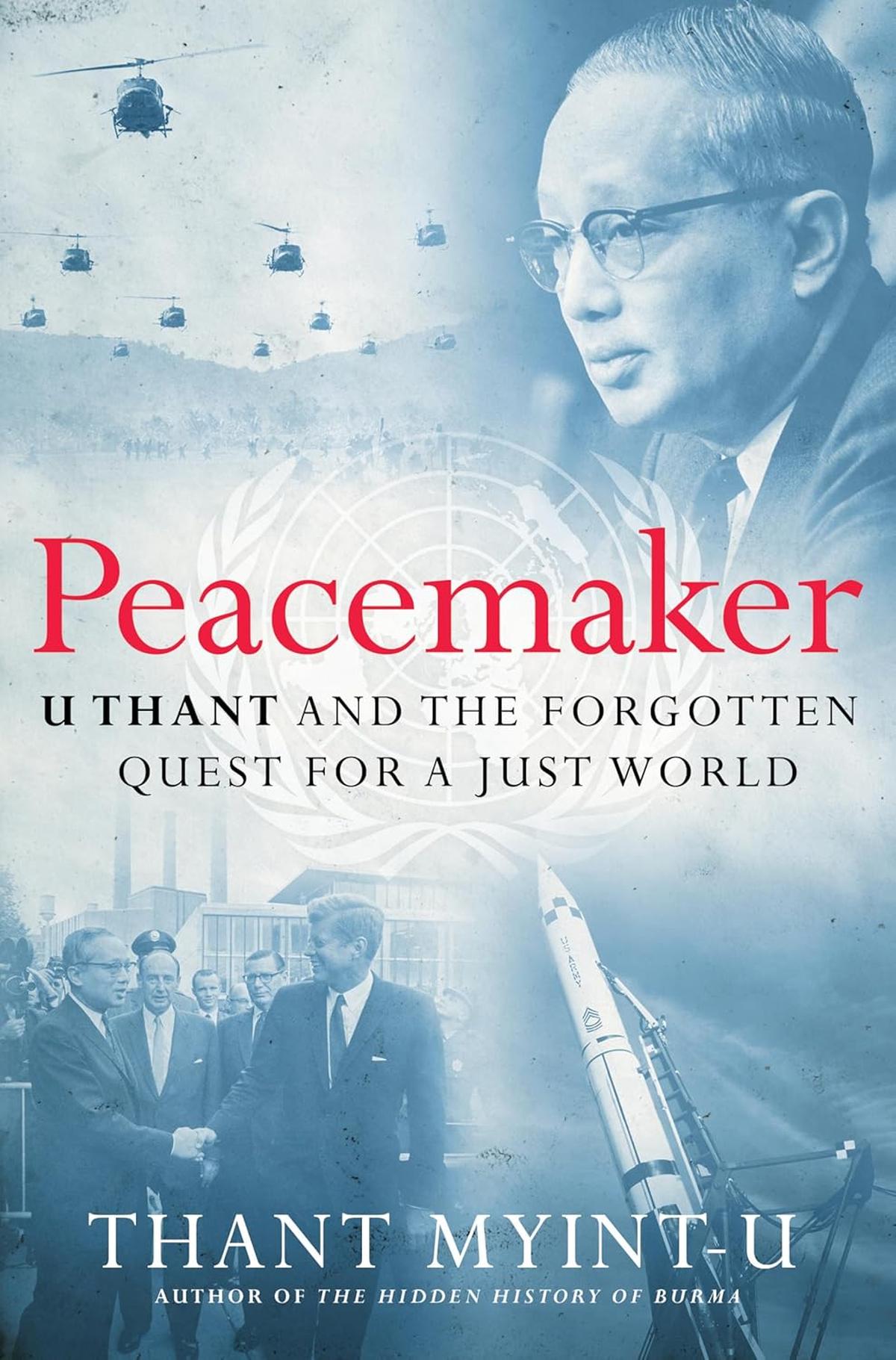
The farewell story begins the vividly recounted biography of Thant, Peacemaker: U Thant and the Forgotten Quest for a Just World (Juggernaut), written by his grandson Thant Myint-U. Thant took over the uneasy mantle of UNSG suddenly after his predecessor Dag Hammarskjöld was killed in a plane crash in the Congo. Hammarskjöld was Swedish, and Trygve Lie before him was Norwegian, but Thant was undaunted by the realisation that “no one who looked like him had negotiated with big powers”, and set out to purposefully bring an Afro-Asian lens to his brand of peace-making.
He cajoled those powers into committing funding for the UN and ensured the defeat of colonialist powers in Congo and Algiers. He often pitched himself into conflict, but his shuttle diplomacy between Washington and Moscow and mediation to end the Cuban missile crisis in 1962, as well as between Delhi and Islamabad during the 1965 war earned him respect. In a Gallup poll survey in 1967, Thant was named the sixth “most admired person” in the U.S., behind Martin Luther King and Robert Kennedy, but ahead of Nixon.
Thant Myint-U, himself a former UN official, and now an acclaimed writer of a number of books on Myanmar, such as The Hidden History of Burma: Race, Capitalism, and the Crisis of Democracy in the 21st Century (Juggernaut) and Where China Meets India: Burma and the New Crossroads of Asia (Faber), brings to life not only his grandfather’s work and the amazing times he lived in, but also the inner labyrinthine and often frustrating workings of the United Nations.
Like many UN Secretary-Generals, Thant was backed by the U.S. and its allies when he came to office, but fell out with those same Western forces when he questioned their actions. The book recounts his futile but unrelenting quest to end the U.S. war in Vietnam, including his run-in with U.S. Secretary of State Dean Rusk who asked him, “Who, do you think you are, a country?”, as well as the acrimony he faced from U.S. newspapers for ordering UN Peacekeepers to stand down during the Six-Day War. The U.S. also opposed his push to recognise communist China rather than Taiwan for the UN seat, but eventually Beijing won its place in 1971, just before Thant demitted office. The biography, that is based mainly on archival material and Thant’s correspondence, is not a personal one. It is a dispassionate account of the peacemaker’s successes, and the setbacks he faced. Where he does voice his disappointment, is in the manner Thant’s record has been “airbrushed” from history.
‘Renaissance’ men
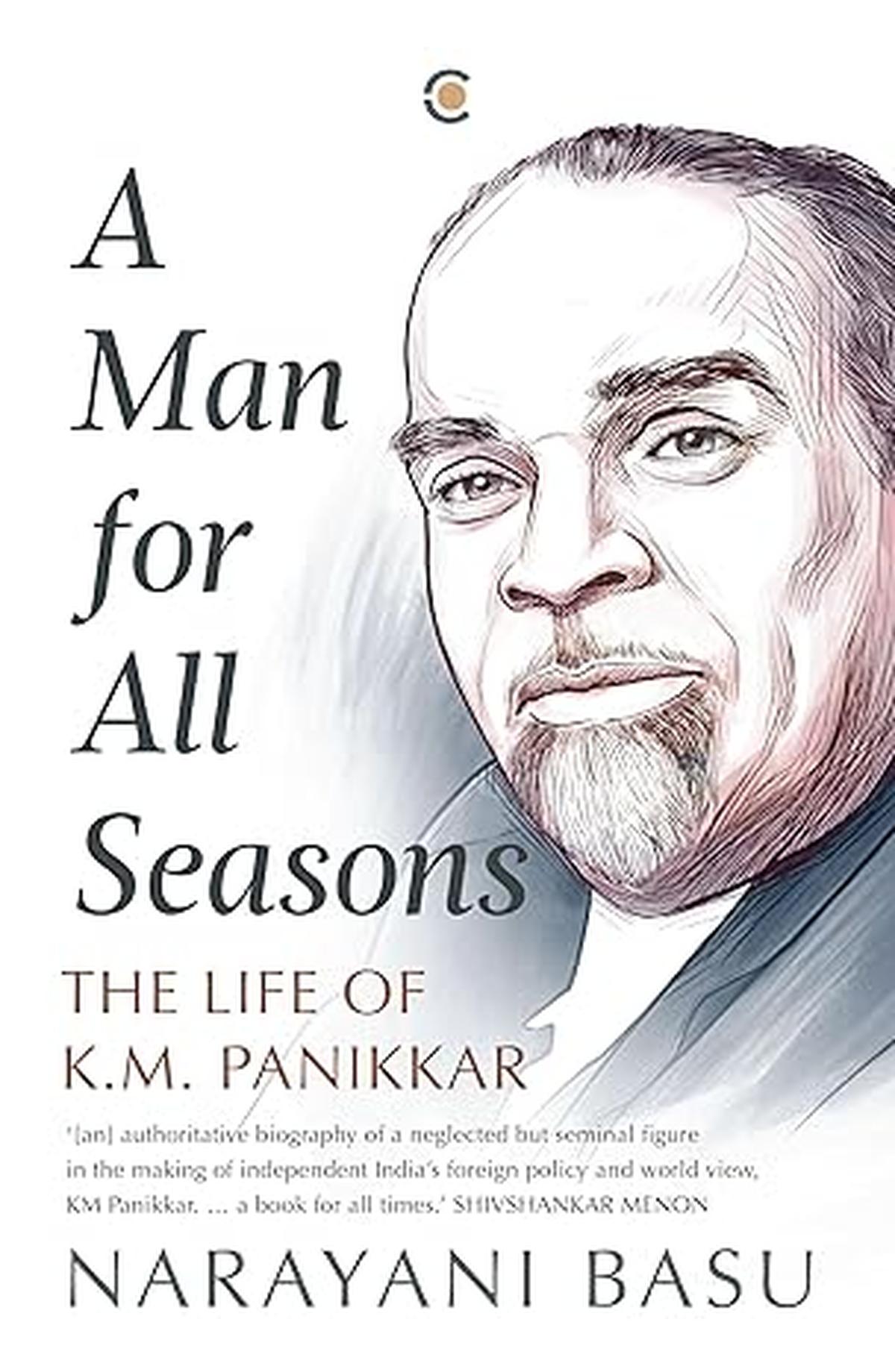
The airbrushing of inconvenient legacies and internationalism are themes in another biography of an Indian diplomat, K.M. Panikkar (A Man for All Seasons: The Life of K.M. Panikkar/Westland Books by Narayani Basu). The first Ambassador to China, Panikkar never crossed paths with Thant but grappled with many of the same global issues.
Panikkar, like Thant, was not educated in global elite institutions, but was an internationalist in his ideas. In today’s times he would be seen as a “Renaissance man”, a thinker and writer, the founding Editor of The Hindustan Times, whose treatise on Indian maritime power is a textbook, a freedom fighter who also fought for the rights of princes in the soon-to-be independent India, earning the moniker “Sardar Panikkar”.
Through a dizzying series of friendships and associations in Kerala, to Aligarh’s Mohammedan Anglo-Oriental College (later Aligarh Muslim University), to Oxford and Paris, which are expertly stitched together by Basu, makes the 800-page tome a delightfully easy read. As India’s diplomat at the United Nations, Panikkar worked with Vijayalakshmi Pandit on India’s decision to oppose the creation of Israel at the UNGA in 1948, although he himself was personally close to Chaim Weizmann and other Zionist leaders. He later persevered, unsuccessfully at the time, in pushing for India’s recognition of Israel, especially when he was India’s ambassador to Egypt, concurrently accredited to Jordan, Syria and Lebanon. He also helped shape India’s leadership during the Suez Canal crisis.
China stint
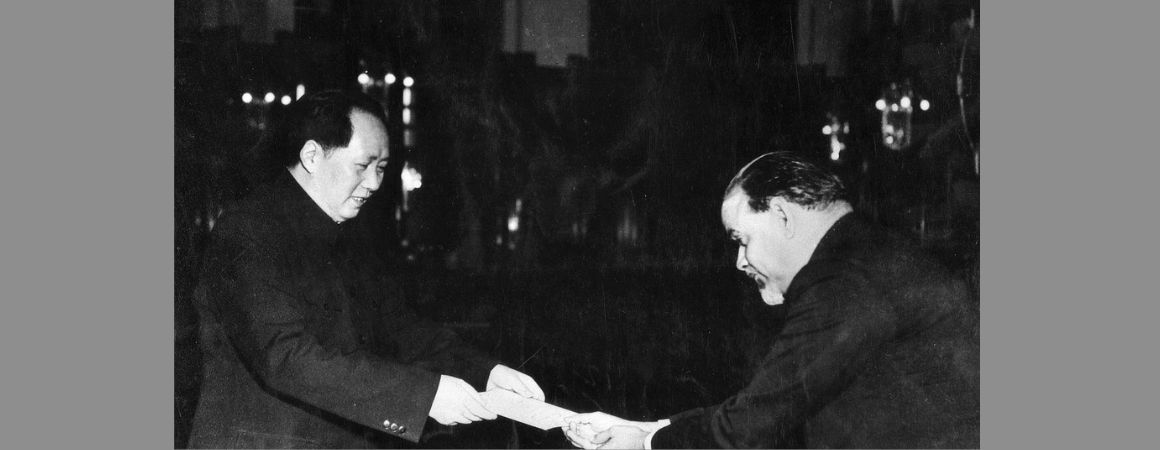
The most intense period of Panikkar’s career, was no doubt, his stint in China (1948-1955). Nehru first decided to send him as Ambassador to Peking under the Kuomintang, as someone who shared his belief in India’s civilisational heritage as well as to “consolidate its position as a postcolonial power”, but then unconventionally returned him as Ambassador under the Communist government. The Panikkars were equally well regarded by Chiang Kai-Shek as by Mao and Chou Enlai, but the continued assignment was bitterly controversial, first over Panikkar’s recommendations on recognising the communist government before other countries had, in 1949, and then his failure to predict China’s occupation of Tibet in 1950. Mr. Panikkar came in for sharp criticism from Home Minister Sardar Patel, who wrote to Nehru his disappointment that India’s Ambassador had been blindsided and unnecessarily obsequious to the communist government. The assignment ended long before the 1962 war, but Panikkar’s reputation for having “gone native” in Beijing with a belief in an India-China compact for Asia, overshadowed his legacy. It is to Basu’s credit that she chose a character with such a troubled reputation, and shone a kinder and more comprehensive light on his larger, brilliant body of work. Her past work on her own great-grandfather (V. P. Menon: The Unsung Architect of Modern India) has also informed the incisive commentary on Panikkar’s China policy.
Like Thant, Panikkar’s contributions demanded a re-look, even as present-day conflicts call for a debate on the global order that both men made their mark in first building decades ago.
Forgotten men: the story of two peacemakers and their ideas of the world
Their paths didn’t cross but U Thant, the UN’s first Secretary General from the global south in 1961, and K.M. Panikkar, India’s first ambassador to China in 1947, were both internationalists. Their roles in history have been largely airbrushed, and two biographies try to make amends
With elections for the next United Nations Secretary General (UNSG) due in 2026, expect the next few months in global politics to be dominated by discussions on what or whom the world body needs, to stave off predictions about the UN’s imminent death. That threat comes not just from the conflicts and calamities the world faces, but from a slew of populist leaders worldwide taking their countries down an uber-nationalist path that diverges from the multilateral global system and the international rules-based order.
At such a time, it may be useful, even comforting to recall the words of U Thant, the UN’s first Secretary General from the global south (Third World as it was called then). In his farewell speech Thant, a former Burmese school teacher who switched careers to become a diplomat, said he was proud of the fact that the flame of internationalism kept burning through his tenure (1961-1971). “Patriotism is good, but an additional allegiance to the entire world community is now essential. We have to get rid of the concept of ‘my country, right or wrong’,” Thant told an eclectic audience, that included Jackie Kennedy, John D. Rockefeller, Jacques Cousteau, John Lennon and Yoko Ono.
A new lens
The farewell story begins the vividly recounted biography of Thant, Peacemaker: U Thant and the Forgotten Quest for a Just World (Juggernaut), written by his grandson Thant Myint-U. Thant took over the uneasy mantle of UNSG suddenly after his predecessor Dag Hammarskjöld was killed in a plane crash in the Congo. Hammarskjöld was Swedish, and Trygve Lie before him was Norwegian, but Thant was undaunted by the realisation that “no one who looked like him had negotiated with big powers”, and set out to purposefully bring an Afro-Asian lens to his brand of peace-making.
He cajoled those powers into committing funding for the UN and ensured the defeat of colonialist powers in Congo and Algiers. He often pitched himself into conflict, but his shuttle diplomacy between Washington and Moscow and mediation to end the Cuban missile crisis in 1962, as well as between Delhi and Islamabad during the 1965 war earned him respect. In a Gallup poll survey in 1967, Thant was named the sixth “most admired person” in the U.S., behind Martin Luther King and Robert Kennedy, but ahead of Nixon.
Thant Myint-U, himself a former UN official, and now an acclaimed writer of a number of books on Myanmar, such as The Hidden History of Burma: Race, Capitalism, and the Crisis of Democracy in the 21st Century (Juggernaut) and Where China Meets India: Burma and the New Crossroads of Asia (Faber), brings to life not only his grandfather’s work and the amazing times he lived in, but also the inner labyrinthine and often frustrating workings of the United Nations.
Like many UN Secretary-Generals, Thant was backed by the U.S. and its allies when he came to office, but fell out with those same Western forces when he questioned their actions. The book recounts his futile but unrelenting quest to end the U.S. war in Vietnam, including his run-in with U.S. Secretary of State Dean Rusk who asked him, “Who, do you think you are, a country?”, as well as the acrimony he faced from U.S. newspapers for ordering UN Peacekeepers to stand down during the Six-Day War. The U.S. also opposed his push to recognise communist China rather than Taiwan for the UN seat, but eventually Beijing won its place in 1971, just before Thant demitted office. The biography, that is based mainly on archival material and Thant’s correspondence, is not a personal one. It is a dispassionate account of the peacemaker’s successes, and the setbacks he faced. Where he does voice his disappointment, is in the manner Thant’s record has been “airbrushed” from history.
‘Renaissance’ men
The airbrushing of inconvenient legacies and internationalism are themes in another biography of an Indian diplomat, K.M. Panikkar (A Man for All Seasons: The Life of K.M. Panikkar/Westland Books by Narayani Basu). The first Ambassador to China, Panikkar never crossed paths with Thant but grappled with many of the same global issues.
Panikkar, like Thant, was not educated in global elite institutions, but was an internationalist in his ideas. In today’s times he would be seen as a “Renaissance man”, a thinker and writer, the founding Editor of The Hindustan Times, whose treatise on Indian maritime power is a textbook, a freedom fighter who also fought for the rights of princes in the soon-to-be independent India, earning the moniker “Sardar Panikkar”.
Through a dizzying series of friendships and associations in Kerala, to Aligarh’s Mohammedan Anglo-Oriental College (later Aligarh Muslim University), to Oxford and Paris, which are expertly stitched together by Basu, makes the 800-page tome a delightfully easy read. As India’s diplomat at the United Nations, Panikkar worked with Vijayalakshmi Pandit on India’s decision to oppose the creation of Israel at the UNGA in 1948, although he himself was personally close to Chaim Weizmann and other Zionist leaders. He later persevered, unsuccessfully at the time, in pushing for India’s recognition of Israel, especially when he was India’s ambassador to Egypt, concurrently accredited to Jordan, Syria and Lebanon. He also helped shape India’s leadership during the Suez Canal crisis.
China stint
The most intense period of Panikkar’s career, was no doubt, his stint in China (1948-1955). Nehru first decided to send him as Ambassador to Peking under the Kuomintang, as someone who shared his belief in India’s civilisational heritage as well as to “consolidate its position as a postcolonial power”, but then unconventionally returned him as Ambassador under the Communist government. The Panikkars were equally well regarded by Chiang Kai-Shek as by Mao and Chou Enlai, but the continued assignment was bitterly controversial, first over Panikkar’s recommendations on recognising the communist government before other countries had, in 1949, and then his failure to predict China’s occupation of Tibet in 1950. Mr. Panikkar came in for sharp criticism from Home Minister Sardar Patel, who wrote to Nehru his disappointment that India’s Ambassador had been blindsided and unnecessarily obsequious to the communist government. The assignment ended long before the 1962 war, but Panikkar’s reputation for having “gone native” in Beijing with a belief in an India-China compact for Asia, overshadowed his legacy. It is to Basu’s credit that she chose a character with such a troubled reputation, and shone a kinder and more comprehensive light on his larger, brilliant body of work. Her past work on her own great-grandfather (V. P. Menon: The Unsung Architect of Modern India) has also informed the incisive commentary on Panikkar’s China policy.
Like Thant, Panikkar’s contributions demanded a re-look, even as present-day conflicts call for a debate on the global order that both men made their mark in first building decades ago.
Forgotten men: the story of two peacemakers and their ideas of the world
Their paths didn’t cross but U Thant, the UN’s first Secretary General from the global south in 1961, and K.M. Panikkar, India’s first ambassador to China in 1947, were both internationalists. Their roles in history have been largely airbrushed, and two biographies try to make amends
With elections for the next United Nations Secretary General (UNSG) due in 2026, expect the next few months in global politics to be dominated by discussions on what or whom the world body needs, to stave off predictions about the UN’s imminent death. That threat comes not just from the conflicts and calamities the world faces, but from a slew of populist leaders worldwide taking their countries down an uber-nationalist path that diverges from the multilateral global system and the international rules-based order.
At such a time, it may be useful, even comforting to recall the words of U Thant, the UN’s first Secretary General from the global south (Third World as it was called then). In his farewell speech Thant, a former Burmese school teacher who switched careers to become a diplomat, said he was proud of the fact that the flame of internationalism kept burning through his tenure (1961-1971). “Patriotism is good, but an additional allegiance to the entire world community is now essential. We have to get rid of the concept of ‘my country, right or wrong’,” Thant told an eclectic audience, that included Jackie Kennedy, John D. Rockefeller, Jacques Cousteau, John Lennon and Yoko Ono.
A new lens
The farewell story begins the vividly recounted biography of Thant, Peacemaker: U Thant and the Forgotten Quest for a Just World (Juggernaut), written by his grandson Thant Myint-U. Thant took over the uneasy mantle of UNSG suddenly after his predecessor Dag Hammarskjöld was killed in a plane crash in the Congo. Hammarskjöld was Swedish, and Trygve Lie before him was Norwegian, but Thant was undaunted by the realisation that “no one who looked like him had negotiated with big powers”, and set out to purposefully bring an Afro-Asian lens to his brand of peace-making.
He cajoled those powers into committing funding for the UN and ensured the defeat of colonialist powers in Congo and Algiers. He often pitched himself into conflict, but his shuttle diplomacy between Washington and Moscow and mediation to end the Cuban missile crisis in 1962, as well as between Delhi and Islamabad during the 1965 war earned him respect. In a Gallup poll survey in 1967, Thant was named the sixth “most admired person” in the U.S., behind Martin Luther King and Robert Kennedy, but ahead of Nixon.
Thant Myint-U, himself a former UN official, and now an acclaimed writer of a number of books on Myanmar, such as The Hidden History of Burma: Race, Capitalism, and the Crisis of Democracy in the 21st Century (Juggernaut) and Where China Meets India: Burma and the New Crossroads of Asia (Faber), brings to life not only his grandfather’s work and the amazing times he lived in, but also the inner labyrinthine and often frustrating workings of the United Nations.
Like many UN Secretary-Generals, Thant was backed by the U.S. and its allies when he came to office, but fell out with those same Western forces when he questioned their actions. The book recounts his futile but unrelenting quest to end the U.S. war in Vietnam, including his run-in with U.S. Secretary of State Dean Rusk who asked him, “Who, do you think you are, a country?”, as well as the acrimony he faced from U.S. newspapers for ordering UN Peacekeepers to stand down during the Six-Day War. The U.S. also opposed his push to recognise communist China rather than Taiwan for the UN seat, but eventually Beijing won its place in 1971, just before Thant demitted office. The biography, that is based mainly on archival material and Thant’s correspondence, is not a personal one. It is a dispassionate account of the peacemaker’s successes, and the setbacks he faced. Where he does voice his disappointment, is in the manner Thant’s record has been “airbrushed” from history.
‘Renaissance’ men
The airbrushing of inconvenient legacies and internationalism are themes in another biography of an Indian diplomat, K.M. Panikkar (A Man for All Seasons: The Life of K.M. Panikkar/Westland Books by Narayani Basu). The first Ambassador to China, Panikkar never crossed paths with Thant but grappled with many of the same global issues.
Panikkar, like Thant, was not educated in global elite institutions, but was an internationalist in his ideas. In today’s times he would be seen as a “Renaissance man”, a thinker and writer, the founding Editor of The Hindustan Times, whose treatise on Indian maritime power is a textbook, a freedom fighter who also fought for the rights of princes in the soon-to-be independent India, earning the moniker “Sardar Panikkar”.
Through a dizzying series of friendships and associations in Kerala, to Aligarh’s Mohammedan Anglo-Oriental College (later Aligarh Muslim University), to Oxford and Paris, which are expertly stitched together by Basu, makes the 800-page tome a delightfully easy read. As India’s diplomat at the United Nations, Panikkar worked with Vijayalakshmi Pandit on India’s decision to oppose the creation of Israel at the UNGA in 1948, although he himself was personally close to Chaim Weizmann and other Zionist leaders. He later persevered, unsuccessfully at the time, in pushing for India’s recognition of Israel, especially when he was India’s ambassador to Egypt, concurrently accredited to Jordan, Syria and Lebanon. He also helped shape India’s leadership during the Suez Canal crisis.
China stint
The most intense period of Panikkar’s career, was no doubt, his stint in China (1948-1955). Nehru first decided to send him as Ambassador to Peking under the Kuomintang, as someone who shared his belief in India’s civilisational heritage as well as to “consolidate its position as a postcolonial power”, but then unconventionally returned him as Ambassador under the Communist government. The Panikkars were equally well regarded by Chiang Kai-Shek as by Mao and Chou Enlai, but the continued assignment was bitterly controversial, first over Panikkar’s recommendations on recognising the communist government before other countries had, in 1949, and then his failure to predict China’s occupation of Tibet in 1950. Mr. Panikkar came in for sharp criticism from Home Minister Sardar Patel, who wrote to Nehru his disappointment that India’s Ambassador had been blindsided and unnecessarily obsequious to the communist government. The assignment ended long before the 1962 war, but Panikkar’s reputation for having “gone native” in Beijing with a belief in an India-China compact for Asia, overshadowed his legacy. It is to Basu’s credit that she chose a character with such a troubled reputation, and shone a kinder and more comprehensive light on his larger, brilliant body of work. Her past work on her own great-grandfather (V. P. Menon: The Unsung Architect of Modern India) has also informed the incisive commentary on Panikkar’s China policy.
Like Thant, Panikkar’s contributions demanded a re-look, even as present-day conflicts call for a debate on the global order that both men made their mark in first building decades ago.



NO COMMENT