A day after the U.S. Supreme Court struck down Trump tariffs, Modi and Lula discuss developments
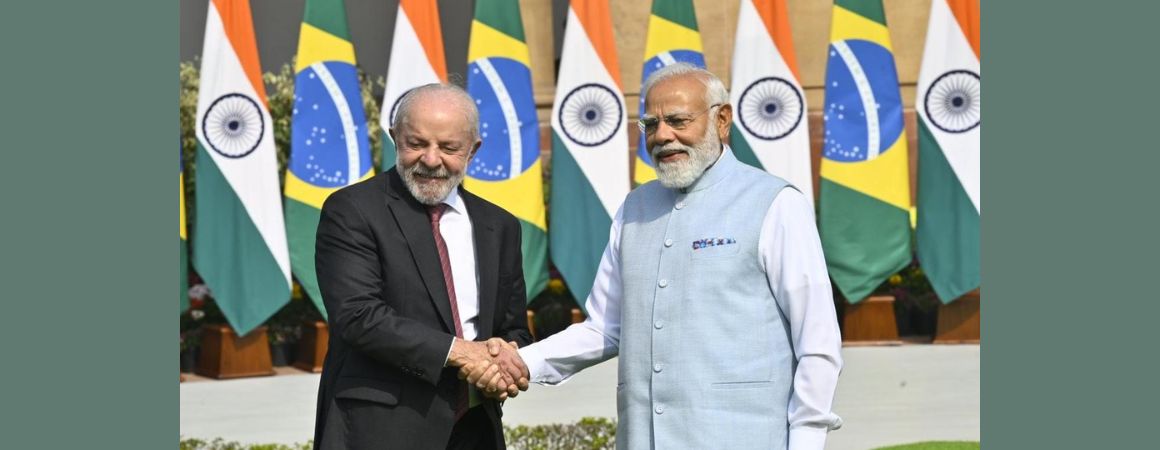
India signed agreements to cooperate in rare earth, critical minerals, and steel mining with Brazil as Prime Minister Narendra Modi held talks with Brazilian President Luiz Inácio Lula da Silva in New Delhi on Saturday (February 21, 2026).
The two countries committed to enhancing trade beyond the current target of $20 billion by 2030, and to expanding the India-Mercosur Preferential Trading Agreement.
A day after the U.S. Supreme Court struck down tariffs imposed by U.S. President Donald Trump, and Mr. Trump levied a new 10% tariff on all countries, the two leaders also discussed the development, which has cast a cloud over the trade deals just negotiated with the U.S. After the talks, the two sides also launched a joint declaration and action plan on a digital partnership for the future.
“Brazil is India’s biggest trading partner in India, and we have committed to going beyond $20 billion dollars in the next five years. Our trade is not just a number, it is a symbol of trust,” Mr. Modi said in a joint press appearance. “When India and Brazil work together, the voice of the Global South becomes stronger and more confident,” he added.
The agreement on critical minerals is a significant step towards diversifying from China, which currently dominates all processing supply chains for critical minerals. India and Brazil have also been attempting to increase cooperation on the biofuel alliance announced in 2023, along with the U.S. and other countries, which has taken a back seat given the Trump administration’s focus on fossil fuels.
“Increasing investments and cooperation in matters of renewable energies and critical minerals is at the core of the pioneering agreement that we have signed today,” Mr. Lula said. “We are not just the two biggest democracies of the Global South. This is a meeting of a digital superpower with a renewable energy superpower,” he added, saying India and Brazil are both regional hubs and defend multilateralism and peace.
Mr. Lula, who was accompanied by 11 Ministers and the largest ever business delegation for his five-day visit, which included the AI Impact Summit, said India and Brazil should aim for a more ambitious trade target, and proposed doubling current levels of trade, estimated at about $12-15 billion, to $30 billion annually by 2030.
Briefing the media, Secretary (East) P. Kumaran said that Mr. Modi and Mr. Lula had discussed trade and tariff developments in the U.S. “Both leaders agreed…that both sides need to study the implications of [the U.S. Supreme Court judgment and the new tariffs] and wait for further developments by the U.S. administration. So we are in a wait and watch mode,” he added
In 2025, the U.S. levied 50% tariffs on both India and Brazil, the highest in the world, for different reasons. In recent months, both have negotiated with the U.S. for lower tariffs and more exemptions on goods, although neither has completed a trade deal with the U.S. yet. Both also face the threat of higher U.S. tariffs over their BRICS membership, where, after Brazil in 2025, India will chair the summit of the 10-nation grouping of developing countries, founded by both countries along with Russia and China.
The two leaders also agreed to step up ties in defence, energy, healthcare, agriculture and pharmaceuticals, and South-South cooperation.
Mr. Modi said India and Brazil were unanimous that terrorism and its supporters were “enemies” of humanity, even as he noted that both sides agreed reform of global institutions is essential to address the challenges facing the world. “Terrorism is not associated with any religion or nationality,” Mr. Lula said, condemning terror attacks in Kashmir, understood to be a reference to the Pahalgam terror attack in 2025. Terrorism should not be “confused with public security challenges that many countries face”. “These are different phenomenon that should not be used as an excuse for intervention at the margins of international law,” Mr. Lula said.
India, Brazil ink agreements on critical minerals, steel mining; agree to step up trade
A day after the U.S. Supreme Court struck down Trump tariffs, Modi and Lula discuss developments
India signed agreements to cooperate in rare earth, critical minerals, and steel mining with Brazil as Prime Minister Narendra Modi held talks with Brazilian President Luiz Inácio Lula da Silva in New Delhi on Saturday (February 21, 2026).
The two countries committed to enhancing trade beyond the current target of $20 billion by 2030, and to expanding the India-Mercosur Preferential Trading Agreement.
A day after the U.S. Supreme Court struck down tariffs imposed by U.S. President Donald Trump, and Mr. Trump levied a new 10% tariff on all countries, the two leaders also discussed the development, which has cast a cloud over the trade deals just negotiated with the U.S. After the talks, the two sides also launched a joint declaration and action plan on a digital partnership for the future.
“Brazil is India’s biggest trading partner in India, and we have committed to going beyond $20 billion dollars in the next five years. Our trade is not just a number, it is a symbol of trust,” Mr. Modi said in a joint press appearance. “When India and Brazil work together, the voice of the Global South becomes stronger and more confident,” he added.
The agreement on critical minerals is a significant step towards diversifying from China, which currently dominates all processing supply chains for critical minerals. India and Brazil have also been attempting to increase cooperation on the biofuel alliance announced in 2023, along with the U.S. and other countries, which has taken a back seat given the Trump administration’s focus on fossil fuels.
“Increasing investments and cooperation in matters of renewable energies and critical minerals is at the core of the pioneering agreement that we have signed today,” Mr. Lula said. “We are not just the two biggest democracies of the Global South. This is a meeting of a digital superpower with a renewable energy superpower,” he added, saying India and Brazil are both regional hubs and defend multilateralism and peace.
Mr. Lula, who was accompanied by 11 Ministers and the largest ever business delegation for his five-day visit, which included the AI Impact Summit, said India and Brazil should aim for a more ambitious trade target, and proposed doubling current levels of trade, estimated at about $12-15 billion, to $30 billion annually by 2030.
Briefing the media, Secretary (East) P. Kumaran said that Mr. Modi and Mr. Lula had discussed trade and tariff developments in the U.S. “Both leaders agreed…that both sides need to study the implications of [the U.S. Supreme Court judgment and the new tariffs] and wait for further developments by the U.S. administration. So we are in a wait and watch mode,” he added
In 2025, the U.S. levied 50% tariffs on both India and Brazil, the highest in the world, for different reasons. In recent months, both have negotiated with the U.S. for lower tariffs and more exemptions on goods, although neither has completed a trade deal with the U.S. yet. Both also face the threat of higher U.S. tariffs over their BRICS membership, where, after Brazil in 2025, India will chair the summit of the 10-nation grouping of developing countries, founded by both countries along with Russia and China.
The two leaders also agreed to step up ties in defence, energy, healthcare, agriculture and pharmaceuticals, and South-South cooperation.
Mr. Modi said India and Brazil were unanimous that terrorism and its supporters were “enemies” of humanity, even as he noted that both sides agreed reform of global institutions is essential to address the challenges facing the world. “Terrorism is not associated with any religion or nationality,” Mr. Lula said, condemning terror attacks in Kashmir, understood to be a reference to the Pahalgam terror attack in 2025. Terrorism should not be “confused with public security challenges that many countries face”. “These are different phenomenon that should not be used as an excuse for intervention at the margins of international law,” Mr. Lula said.



NO COMMENT