India among 50 countries invited to Critical Minerals Ministerial meeting in Washington to counter Chinese restrictions
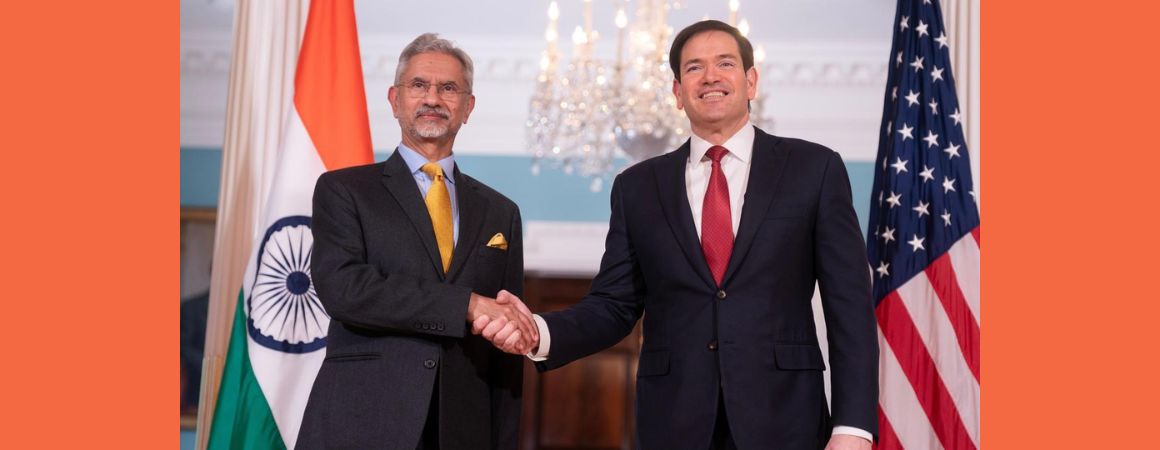
Welcoming the India-U.S. trade deal announced on Monday (February 2, 2026), External Affairs Minister S. Jaishankar met with U.S. Secretary of State Marco Rubio and U.S. Treasury Secretary Scott Bessent in Washington on Wednesday (February 4, 2026), where both sides agreed to “formalise” cooperation on critical minerals, and take forward their economic partnership.
The meetings came two days after a call between U.S. President Donald Trump and Prime Minister Narendra Modi, where they announced a reduction in U.S. tariffs on Indian goods to 18%, and the cancellation of 25% penalty tariffs for the purchase of Russian oil.
Speaking at the event Mr. Jaishankar underlined “challenges of excessive concentration” of critical mineral supply chains, and expressed support for U.S. initiatives to de-risk them.
The Centre has come under sharp criticism from the Opposition over the lack of transparency and details of the India-U.S. trade deal agreed to, and in particular the U.S. government’s statement that India has agreed to “stop buying” Russian oil, cut tariffs for most U.S. goods to zero, give U.S. agricultural products market access, and commit $500 billion for investments and purchases of American goods.
In a social media post, Mr. Jaishankar said that he had held a “wide-ranging conversation” with Mr. Rubio, and that discussions included “trade, energy, nuclear, defence, critical minerals and technology”. “[We] agreed on the early meetings of various mechanisms to advance our shared interests,” Mr. Jaishankar said, although the two leaders did not take any questions from the media.
Mr. Jaishankar held the meetings ahead of attending the U.S.-led ‘Critical Minerals Ministerial’ in Washington on Wednesday (February 4, 2026) that called for “preferential trade zones” to secure semiconductor supply chains, in an effort to work around China’s recent restrictions on trade in critical minerals, and build alternate supply routes. The countries attending were invited to take membership of a grouping that will be shaped by the U.S., and included about 50 countries from Europe, Asia, South America, and Africa, including Pakistan, South Korea, Singapore, Thailand, Japan, Germany, and Canada.
Mr. Jaishankar’s participation in the event is significant as many of the other countries present were represented by their Energy Ministers, and indicates a desire by Delhi and Washington to move quickly on restoring ties ruptured by a year of tensions, and harsh 50% U.S. tariffs on Indian goods.
Mr. Jaishankar’s visit to Washington, his seventh since Mr. Trump’s re-election in November 2024, is seen as a move to reset ties, and pick up the engagements that were sidelined in 2025, particularly on the Quad and Indo-Pacific cooperation, and critical minerals and semiconductor technology. India is expected to be invited to join the U.S.-led Pax Silica Initiative launched in December 2025, U.S. Ambassador to India Sergio Gor had announced in January this year.
India will also host the Artificial Intelligence Impact Summit later in February, where a high-level U.S. delegation is expected. Meanwhile, the government still hopes to host the Quad summit this year, which it was unable to do in 2025, and Mr. Jaishankar discussed Quad cooperation with the U.S. Secretary of State Marco Rubio, who has thus far not visited India.
“Secretary Rubio and Minister Jaishankar concluded their meeting by expressing their commitment to expanding bilateral and multilateral cooperation through the Quad. They acknowledged that a prosperous Indo-Pacific region remains vital to advancing our shared interests,” the U.S. State Department said in a readout of their meeting on Wednesday (February 4, 2026).
Jaishankar-Rubio welcome trade deal, discuss critical minerals, Quad cooperation
India among 50 countries invited to Critical Minerals Ministerial meeting in Washington to counter Chinese restrictions
Welcoming the India-U.S. trade deal announced on Monday (February 2, 2026), External Affairs Minister S. Jaishankar met with U.S. Secretary of State Marco Rubio and U.S. Treasury Secretary Scott Bessent in Washington on Wednesday (February 4, 2026), where both sides agreed to “formalise” cooperation on critical minerals, and take forward their economic partnership.
The meetings came two days after a call between U.S. President Donald Trump and Prime Minister Narendra Modi, where they announced a reduction in U.S. tariffs on Indian goods to 18%, and the cancellation of 25% penalty tariffs for the purchase of Russian oil.
Speaking at the event Mr. Jaishankar underlined “challenges of excessive concentration” of critical mineral supply chains, and expressed support for U.S. initiatives to de-risk them.
The Centre has come under sharp criticism from the Opposition over the lack of transparency and details of the India-U.S. trade deal agreed to, and in particular the U.S. government’s statement that India has agreed to “stop buying” Russian oil, cut tariffs for most U.S. goods to zero, give U.S. agricultural products market access, and commit $500 billion for investments and purchases of American goods.
In a social media post, Mr. Jaishankar said that he had held a “wide-ranging conversation” with Mr. Rubio, and that discussions included “trade, energy, nuclear, defence, critical minerals and technology”. “[We] agreed on the early meetings of various mechanisms to advance our shared interests,” Mr. Jaishankar said, although the two leaders did not take any questions from the media.
Mr. Jaishankar held the meetings ahead of attending the U.S.-led ‘Critical Minerals Ministerial’ in Washington on Wednesday (February 4, 2026) that called for “preferential trade zones” to secure semiconductor supply chains, in an effort to work around China’s recent restrictions on trade in critical minerals, and build alternate supply routes. The countries attending were invited to take membership of a grouping that will be shaped by the U.S., and included about 50 countries from Europe, Asia, South America, and Africa, including Pakistan, South Korea, Singapore, Thailand, Japan, Germany, and Canada.
Mr. Jaishankar’s participation in the event is significant as many of the other countries present were represented by their Energy Ministers, and indicates a desire by Delhi and Washington to move quickly on restoring ties ruptured by a year of tensions, and harsh 50% U.S. tariffs on Indian goods.
Mr. Jaishankar’s visit to Washington, his seventh since Mr. Trump’s re-election in November 2024, is seen as a move to reset ties, and pick up the engagements that were sidelined in 2025, particularly on the Quad and Indo-Pacific cooperation, and critical minerals and semiconductor technology. India is expected to be invited to join the U.S.-led Pax Silica Initiative launched in December 2025, U.S. Ambassador to India Sergio Gor had announced in January this year.
India will also host the Artificial Intelligence Impact Summit later in February, where a high-level U.S. delegation is expected. Meanwhile, the government still hopes to host the Quad summit this year, which it was unable to do in 2025, and Mr. Jaishankar discussed Quad cooperation with the U.S. Secretary of State Marco Rubio, who has thus far not visited India.
“Secretary Rubio and Minister Jaishankar concluded their meeting by expressing their commitment to expanding bilateral and multilateral cooperation through the Quad. They acknowledged that a prosperous Indo-Pacific region remains vital to advancing our shared interests,” the U.S. State Department said in a readout of their meeting on Wednesday (February 4, 2026).





NO COMMENT