The optics of the visit have consequences for India’s ties with the U.S. and the EU, as do expected agreements on oil, trade, defence, nuclear cooperation, and labour mobility
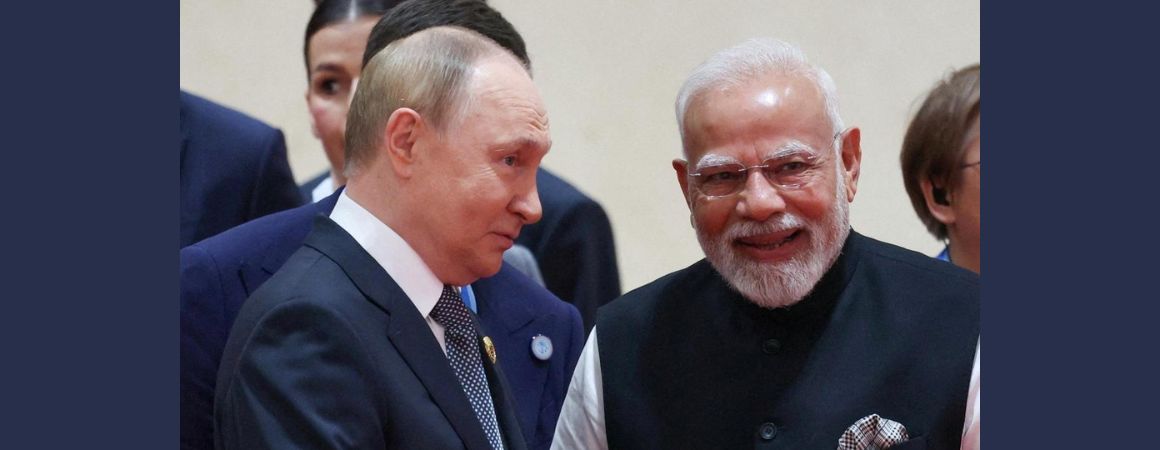
As Prime Minister Narendra Modi walked down the red carpet at Palam airport on Thursday (December 4, 2025) to give Russian President Vladimir Putin his trademark hug as part of a grand welcome, the government signalled that India’s ties with Russia are untouched by Western concerns, the International Criminal Court’s arrest warrant, and U.S. and European sanctions.
Even so, as the two leaders sit down for bilateral talks on Friday (December 5, 2025), the government will need to manage a tense tightrope walk, particularly between Russia and Europe, on a number of issues including the optics of the visit, oil imports and trade, defence, nuclear cooperation, and a mobility agreement.
The optics of the visit are particularly significant, given the other visitors expected shortly: A U.S. trade delegation is expected this month, German Chancellor Friedrich Merz is set to visit India in early January, and the EU’s top leadership Ursula Von Der Leyen and Antonio Costa will be guests for Republic Day and the EU-India summit. The government hopes to finalise the EU-India free trade agreement (FTA) as well as the U.S.-India FTA in the next few weeks, and will not want the announcements made on Friday (December 5, 2025) to delay or derail any of those outcomes.
Oil and trade
Russian oil is by far the most contentious piece of the diplomatic puzzle, after a rapid expansion in India’s oil purchases from less than 2% of its oil basket before the Ukraine conflict, to 40% last year, driving India-Russia trade from its annual average of $10 billion to $68.7 billion in 2024-25.
With India now expected to cut its oil imports drastically in the wake of U.S. sanctions, India and Russia will on Friday (December 5, 2025) discuss replacing at least some of those oil purchases with other commodities from Russia, as well as boosting Indian exports to Russia of produce and processed foods, apparel, and some machinery, particularly over the newly developed Eastern Maritime Corridor from Chennai to Vladivostok.
Both sides will also push for more progress on the FTA between India and the Eurasian Economic Union (EAEU) during the visit, even as Indian exporters hit by the U.S.’s 50% tariffs seek new markets.
Labour mobility
The India-Russia labour mobility agreement to be announced as the “centrepiece” of Mr. Putin’s visit could be a crucial boost for Indian skilled and semi-skilled workers seeking jobs as other Western markets tighten their immigration controls.
Meanwhile, war-weary and heavily-sanctioned Russia is facing a labour shortfall of what is estimated to be about 3.1 million jobs by the end of the decade, and is seeking Indian workers for its construction, technology, and manufacturing sectors.
Defence and nuclear pacts
The visit will be watched most closely for any defence deals, given that the U.S. had earlier threatened to impose sanctions under the Countering America’s Adversaries Through Sanctions Act after India finalised a deal to buy S-400 air defence systems from Moscow. Russian technology transfer is key for India, as no other country thus far has agreed to share its most sensitive technologies.
With the Russian Duma now clearing the RELOS military logistics pact with India, more military exercises with Russia — which the EU had protested earlier this year — could be expected.
The same is true for nuclear power cooperation. On December 3, in response to a question in Parliament, the government said the Department of Atomic Energy had held talks with Russia’s state-owned nuclear energy giant Rosatom about India’s plans for five indigenous small modular reactors. France and other EU member states are also bidding for these projects.
Putin’s India visit: A tense tightrope walk for Modi government
The optics of the visit have consequences for India’s ties with the U.S. and the EU, as do expected agreements on oil, trade, defence, nuclear cooperation, and labour mobility
As Prime Minister Narendra Modi walked down the red carpet at Palam airport on Thursday (December 4, 2025) to give Russian President Vladimir Putin his trademark hug as part of a grand welcome, the government signalled that India’s ties with Russia are untouched by Western concerns, the International Criminal Court’s arrest warrant, and U.S. and European sanctions.
Even so, as the two leaders sit down for bilateral talks on Friday (December 5, 2025), the government will need to manage a tense tightrope walk, particularly between Russia and Europe, on a number of issues including the optics of the visit, oil imports and trade, defence, nuclear cooperation, and a mobility agreement.
The optics of the visit are particularly significant, given the other visitors expected shortly: A U.S. trade delegation is expected this month, German Chancellor Friedrich Merz is set to visit India in early January, and the EU’s top leadership Ursula Von Der Leyen and Antonio Costa will be guests for Republic Day and the EU-India summit. The government hopes to finalise the EU-India free trade agreement (FTA) as well as the U.S.-India FTA in the next few weeks, and will not want the announcements made on Friday (December 5, 2025) to delay or derail any of those outcomes.
Oil and trade
Russian oil is by far the most contentious piece of the diplomatic puzzle, after a rapid expansion in India’s oil purchases from less than 2% of its oil basket before the Ukraine conflict, to 40% last year, driving India-Russia trade from its annual average of $10 billion to $68.7 billion in 2024-25.
With India now expected to cut its oil imports drastically in the wake of U.S. sanctions, India and Russia will on Friday (December 5, 2025) discuss replacing at least some of those oil purchases with other commodities from Russia, as well as boosting Indian exports to Russia of produce and processed foods, apparel, and some machinery, particularly over the newly developed Eastern Maritime Corridor from Chennai to Vladivostok.
Both sides will also push for more progress on the FTA between India and the Eurasian Economic Union (EAEU) during the visit, even as Indian exporters hit by the U.S.’s 50% tariffs seek new markets.
Labour mobility
The India-Russia labour mobility agreement to be announced as the “centrepiece” of Mr. Putin’s visit could be a crucial boost for Indian skilled and semi-skilled workers seeking jobs as other Western markets tighten their immigration controls.
Meanwhile, war-weary and heavily-sanctioned Russia is facing a labour shortfall of what is estimated to be about 3.1 million jobs by the end of the decade, and is seeking Indian workers for its construction, technology, and manufacturing sectors.
Defence and nuclear pacts
The visit will be watched most closely for any defence deals, given that the U.S. had earlier threatened to impose sanctions under the Countering America’s Adversaries Through Sanctions Act after India finalised a deal to buy S-400 air defence systems from Moscow. Russian technology transfer is key for India, as no other country thus far has agreed to share its most sensitive technologies.
With the Russian Duma now clearing the RELOS military logistics pact with India, more military exercises with Russia — which the EU had protested earlier this year — could be expected.
The same is true for nuclear power cooperation. On December 3, in response to a question in Parliament, the government said the Department of Atomic Energy had held talks with Russia’s state-owned nuclear energy giant Rosatom about India’s plans for five indigenous small modular reactors. France and other EU member states are also bidding for these projects.



NO COMMENT