The SHANTI Bill penalises operators in case of a nuclear accident, requiring them to compensate on the basis of the the size of plants operated and not the damage experienced in itself
The Centre introduced in the Lok Sabha on Monday (December 15, 2025) the SHANTI Bill that aims to incentivise private sector participation, both Indian and foreign, into nuclear power production. It does this by replacing India’s existing laws — the Atomic Energy Act, 1962 and the Civil Liability for Nuclear Damage (CLND) Act, 2010, with the Sustainable Harnessing and Advancement of Nuclear energy for Transforming India (SHANTI) Bill, 2025.
The latter creates an atomic energy regulatory structure that is answerable to Parliament, removes the Nuclear Power Corporation of India’s monopoly over operating nuclear plants, and restricts the instances under which nuclear power plant operators can claim compensation from suppliers of equipment in case of an accident. Simultaneously, it also buffers operators by introducing limits on the extent of their liability, in case of violating the laws under the Act, based on the size of the plants they operate, and limits the maximum penalty on them to ₹1 crore even in the case of a “severe breach”.
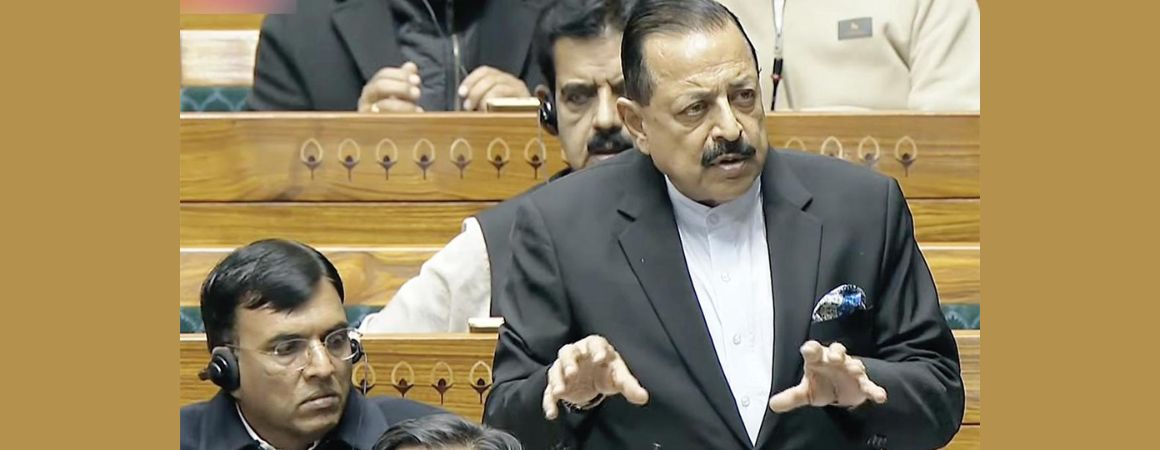
“The Bill…proposes a revised and pragmatic civil liability framework for nuclear damage, confers statutory status on the Atomic Energy Regulatory Board (AERB), and strengthens mechanisms related to safety, security, safeguards, quality assurance and emergency preparedness,” a statement by the Union Ministry of Science and Technology said. Jitendra Singh, Minister of State for Science and Technology, introduced the Bill in the Lok Sabha.
Privatising the nuclear power sector, which currently makes up 1.5% of India’s installed power capacity, and 3% of the electricity produced, has been on the government’s agenda in recent years to boost clean energy production, improve grid stability, and move towards its 2070 net-zero (zero net-carbon emissions) targets. This includes scaling-up installed nuclear power to 100 GW, up from the current 8.8 GW, by 2047; a ₹20,000 crore mission announced in the Union Budget this year to develop ‘small modular reactors’; and a slew of customised 220 MW pressurised heavy water reactors (the ’Bharat Small Modular Reactors’).
While the high costs of installing nuclear power plants, land acquisition, the disposal of used-up nuclear fuel, and the apprehension of the fallout of nuclear accidents have retarded nuclear power expansion in India, investments in the sector has been conservative due to the potentially unlimited liability to plant operators and their partners in case of an accident.
The CNLD enables those affected by a nuclear accident to claim compensation from a nuclear plant operator upto ₹1,500 crore, and in theory involving the Centre upto ₹3,400 crore (at current rates). These same laws also allow the plant operator to claim recourse from a supplier of equipment under three instances, if (a) the supplier and an operator have an explicit agreement (b) the nuclear incident has proved to be due to the suppliers’ or their equipment’s fault, and (c) the nuclear incident has resulted from deliberate intent to cause nuclear damage.
The SHANTI Bill, while repealing the CLND, even removes the word ‘supplier’ (which incidentally appeared only once in the CLND), and removes the instance of suppliers or their equipment being responsible for the accident as being grounds for operators to claim compensation. This has been one of the demands of foreign nuclear companies who have expressed interest in India.
“This is a long overdue reform. The Bill gives hope for large-scale innovation in nuclear technology through amendments in patent laws, aligns with global liability conventions, and proposes the expansion of nuclear energy projects through private sector participation. Any explanation regarding the CNLD Act of 2010 seemed inadequate to foreign and domestic suppliers and vendors,” M.P. Ram Mohan, Professor, Indian Institute of Management, Ahmedabad, an expert in India’s nuclear laws, told The Hindu. “In opening up the sector for private investment and operation, the role of the AERB as a safety regulator assumes critical importance — the regulatory process must be rigorous and participative, and the public must be taken into confidence,” Prof. Ram Mohan said.
Diplomatic experts, who declined to be identified, said that the government’s draft of the nuclear Bill is “one step forward” in terms of addressing concerns from foreign nuclear suppliers that have held up all contracts since 2010, but it still carries some ambiguity over liability. The SHANTI Bill penalises operators in case of a nuclear accident, requiring them to compensate on the basis of the size of plants operated and not the damage experienced in itself. Installations with thermal power above 3,600 MW can have operators pay upto ₹3,000 crore; between 1,500 MW and 3.600 MW upto ₹1,500 crore; and those lower down (150 MW) to ₹100 crore.
Opposition MPs criticised the Bill. The Bill, along with two, unrelated others, should be referred to a “Standing Committee” in the “best of Parliamentary traditions and practices”, Congress Rajya Sabha MP Jairam Ramesh posted on socia media platform X.
The Bill “…concentrated power in the Centre and its authorities…[and the] absence of institutional independence undermined the doctrine of separation of powers”, Congress MP Manish Tewari said in Parliament.
In 2010, the then United Progressive Alliance (UPA) government faced severe opposition from the then Opposition led by the Bharatiya Janata Party (BJP), which accused the government of a “sell-out” by not including strict liability for nuclear suppliers in case of a nuclear accident. The Opposition had drawn parallels to the Union Carbide gas leak of 1984, where the U.S. company and its American officials had been able to escape without being prosecuted.
Under pressure, the government accepted amendments to the 2010 Civil Liability for Nuclear Damage Bill by including Clause 17(a), which introduced the “suppliers liability” clause, and Clause 46, which allowed for the jurisdiction of a civil court in certain cases. This had led to protests from prospective nuclear suppliers, most notably the U.S.’s Westinghouse, and France’s Areva, both of whom signed Memoranda of Understanding (MoUs) with India to construct nuclear plants, but didn’t eventually build them, for a number of reasons, including the liability issue.
During then U.S. President Barack Obama’s visit to Delhi in January 2015, Prime Minister Narendra Modi and Mr. Obama discussed the issue, and the government announced that the problems had been resolved without changing the CLND Act. However, there has been no movement on a concrete contract with France, the U.S., and Japan, which supplies critical reactor components, despite India having signed civil nuclear agreements with each of these countries. To date, only Russia supplies and operates a nuclear plant in India, in Kudankulam, under an agreement signed prior to the CLND Act.
SHANTI Bill spurs private sector to make, run nuclear plants
The SHANTI Bill penalises operators in case of a nuclear accident, requiring them to compensate on the basis of the the size of plants operated and not the damage experienced in itself
The Centre introduced in the Lok Sabha on Monday (December 15, 2025) the SHANTI Bill that aims to incentivise private sector participation, both Indian and foreign, into nuclear power production. It does this by replacing India’s existing laws — the Atomic Energy Act, 1962 and the Civil Liability for Nuclear Damage (CLND) Act, 2010, with the Sustainable Harnessing and Advancement of Nuclear energy for Transforming India (SHANTI) Bill, 2025.
The latter creates an atomic energy regulatory structure that is answerable to Parliament, removes the Nuclear Power Corporation of India’s monopoly over operating nuclear plants, and restricts the instances under which nuclear power plant operators can claim compensation from suppliers of equipment in case of an accident. Simultaneously, it also buffers operators by introducing limits on the extent of their liability, in case of violating the laws under the Act, based on the size of the plants they operate, and limits the maximum penalty on them to ₹1 crore even in the case of a “severe breach”.
“The Bill…proposes a revised and pragmatic civil liability framework for nuclear damage, confers statutory status on the Atomic Energy Regulatory Board (AERB), and strengthens mechanisms related to safety, security, safeguards, quality assurance and emergency preparedness,” a statement by the Union Ministry of Science and Technology said. Jitendra Singh, Minister of State for Science and Technology, introduced the Bill in the Lok Sabha.
Privatising the nuclear power sector, which currently makes up 1.5% of India’s installed power capacity, and 3% of the electricity produced, has been on the government’s agenda in recent years to boost clean energy production, improve grid stability, and move towards its 2070 net-zero (zero net-carbon emissions) targets. This includes scaling-up installed nuclear power to 100 GW, up from the current 8.8 GW, by 2047; a ₹20,000 crore mission announced in the Union Budget this year to develop ‘small modular reactors’; and a slew of customised 220 MW pressurised heavy water reactors (the ’Bharat Small Modular Reactors’).
While the high costs of installing nuclear power plants, land acquisition, the disposal of used-up nuclear fuel, and the apprehension of the fallout of nuclear accidents have retarded nuclear power expansion in India, investments in the sector has been conservative due to the potentially unlimited liability to plant operators and their partners in case of an accident.
The CNLD enables those affected by a nuclear accident to claim compensation from a nuclear plant operator upto ₹1,500 crore, and in theory involving the Centre upto ₹3,400 crore (at current rates). These same laws also allow the plant operator to claim recourse from a supplier of equipment under three instances, if (a) the supplier and an operator have an explicit agreement (b) the nuclear incident has proved to be due to the suppliers’ or their equipment’s fault, and (c) the nuclear incident has resulted from deliberate intent to cause nuclear damage.
The SHANTI Bill, while repealing the CLND, even removes the word ‘supplier’ (which incidentally appeared only once in the CLND), and removes the instance of suppliers or their equipment being responsible for the accident as being grounds for operators to claim compensation. This has been one of the demands of foreign nuclear companies who have expressed interest in India.
“This is a long overdue reform. The Bill gives hope for large-scale innovation in nuclear technology through amendments in patent laws, aligns with global liability conventions, and proposes the expansion of nuclear energy projects through private sector participation. Any explanation regarding the CNLD Act of 2010 seemed inadequate to foreign and domestic suppliers and vendors,” M.P. Ram Mohan, Professor, Indian Institute of Management, Ahmedabad, an expert in India’s nuclear laws, told The Hindu. “In opening up the sector for private investment and operation, the role of the AERB as a safety regulator assumes critical importance — the regulatory process must be rigorous and participative, and the public must be taken into confidence,” Prof. Ram Mohan said.
Diplomatic experts, who declined to be identified, said that the government’s draft of the nuclear Bill is “one step forward” in terms of addressing concerns from foreign nuclear suppliers that have held up all contracts since 2010, but it still carries some ambiguity over liability. The SHANTI Bill penalises operators in case of a nuclear accident, requiring them to compensate on the basis of the size of plants operated and not the damage experienced in itself. Installations with thermal power above 3,600 MW can have operators pay upto ₹3,000 crore; between 1,500 MW and 3.600 MW upto ₹1,500 crore; and those lower down (150 MW) to ₹100 crore.
Opposition MPs criticised the Bill. The Bill, along with two, unrelated others, should be referred to a “Standing Committee” in the “best of Parliamentary traditions and practices”, Congress Rajya Sabha MP Jairam Ramesh posted on socia media platform X.
The Bill “…concentrated power in the Centre and its authorities…[and the] absence of institutional independence undermined the doctrine of separation of powers”, Congress MP Manish Tewari said in Parliament.
In 2010, the then United Progressive Alliance (UPA) government faced severe opposition from the then Opposition led by the Bharatiya Janata Party (BJP), which accused the government of a “sell-out” by not including strict liability for nuclear suppliers in case of a nuclear accident. The Opposition had drawn parallels to the Union Carbide gas leak of 1984, where the U.S. company and its American officials had been able to escape without being prosecuted.
Under pressure, the government accepted amendments to the 2010 Civil Liability for Nuclear Damage Bill by including Clause 17(a), which introduced the “suppliers liability” clause, and Clause 46, which allowed for the jurisdiction of a civil court in certain cases. This had led to protests from prospective nuclear suppliers, most notably the U.S.’s Westinghouse, and France’s Areva, both of whom signed Memoranda of Understanding (MoUs) with India to construct nuclear plants, but didn’t eventually build them, for a number of reasons, including the liability issue.
During then U.S. President Barack Obama’s visit to Delhi in January 2015, Prime Minister Narendra Modi and Mr. Obama discussed the issue, and the government announced that the problems had been resolved without changing the CLND Act. However, there has been no movement on a concrete contract with France, the U.S., and Japan, which supplies critical reactor components, despite India having signed civil nuclear agreements with each of these countries. To date, only Russia supplies and operates a nuclear plant in India, in Kudankulam, under an agreement signed prior to the CLND Act.






NO COMMENT