External Affairs Ministry issues statement calling the attack “unacceptable” and says the “targeting of civilian infrastructure and innocent civilians” must end; PM Modi to visit UAE on May 15
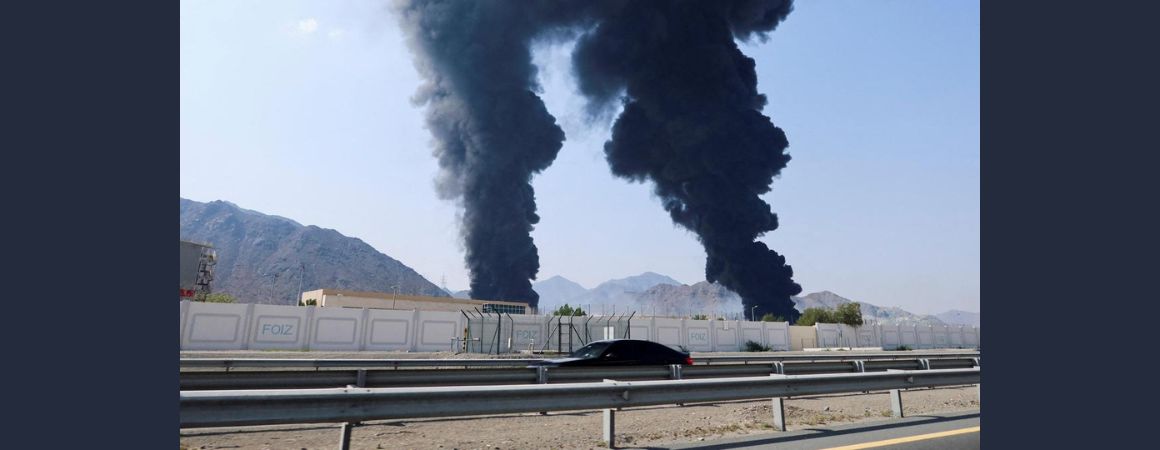
In one of his toughest statements amidst the war in West Asia, Prime Minister Narendra Modi “strongly condemned” the drone and missile attacks by Iran on oil installations in Fujairah where three Indians were injured, and affirmed “solidarity” with the UAE.
Mr. Modi’s words, issued in a social media post, come days ahead of his visit to Abu Dhabi, where he is expected to strengthen ties with the UAE in talks with President Mohamed bin Zayed Al Nahyan.
Earlier on Tuesday (May 5, 2026), the External Affairs Ministry also issued a statement calling the attack “unacceptable” and said the “targeting of civilian infrastructure and innocent civilians” must end. Both statements also demanded an end to the blockade of the Strait of Hormuz, where the U.S. attempted on Monday to forcibly open up shipping channels by sinking a number of Iranian boats, action that is believed to have triggered the Iranian attack.
“[I] strongly condemn the attacks on the UAE that resulted in injuries to three Indian nationals. Targeting civilians and infrastructure is unacceptable,” said Mr. Modi in his post. “India stands in firm solidarity with the UAE and reiterates its support for the peaceful resolution of all issues through dialogue and diplomacy.”
The Ministry statement called for “free and unimpeded navigation and commerce through the Strait of Hormuz in keeping with international law”. “India stands ready to support all efforts for a peaceful resolution of issues,” it added.
The attacks by the U.S. and Iran on Monday were the first serious outbreak of violence since the April 8 ceasefire that was agreed to in talks in Pakistan between the two countries. The incidents on Monday led to fears of a resumption in the war in West Asia that has already caused widespread losses across the world.
The government’s response is believed to be aimed at sending a message of support to the UAE, that has borne the brunt of Iran’s attacks in an ‘asymmetric’ response to the strikes initiated by the U.S. and Israel on February 28 this year. Thus far, India has not named the U.S. and Israel, or Iran directly in criticising attacks during the war in West Asia. However, the government has sent envoys to the Gulf, including External Affairs S. Jaishankar and National Security Advisor Ajit Doval who visited the UAE separately in April, and Prime Minister Modi’s visit to Abu Dhabi, expected on May 15 on his way to a four-nation European tour, is expected to reinforce that message.
The Ministry has repeatedly expressed its concerns for Indians, estimated to be 10 million, living in the worst-hit areas of the Gulf region, especially the UAE, where Iranian drones and missiles set fire to oil facilities. The largest number of Indians, about 4.3 million, live and work in the UAE, making them about a third of the total population, as well as the biggest expatriate community. Remittances from the Gulf to India amount to more than $40 billion a year, with the UAE the top earner, accounting for more than half.
The government has also been worried about 13 Indian-flagged ships with about 340 Indian seafarers on board that are stuck in the Persian Gulf, and several hundred Indians on board other ships. In addition, the Hormuz blockade has sent oil prices up more than 60% and commodity food prices up 8.3% according to UNCTAD estimates.
In his statement, Mr. Modi said that ensuring safe passage through the Strait of Hormuz is “vital for enduring regional peace, stability and global energy security”.
PM Modi ‘strongly’ condemns attacks on oil hub, expresses ‘firm solidarity’ with UAE
External Affairs Ministry issues statement calling the attack “unacceptable” and says the “targeting of civilian infrastructure and innocent civilians” must end; PM Modi to visit UAE on May 15
In one of his toughest statements amidst the war in West Asia, Prime Minister Narendra Modi “strongly condemned” the drone and missile attacks by Iran on oil installations in Fujairah where three Indians were injured, and affirmed “solidarity” with the UAE.
Mr. Modi’s words, issued in a social media post, come days ahead of his visit to Abu Dhabi, where he is expected to strengthen ties with the UAE in talks with President Mohamed bin Zayed Al Nahyan.
Earlier on Tuesday (May 5, 2026), the External Affairs Ministry also issued a statement calling the attack “unacceptable” and said the “targeting of civilian infrastructure and innocent civilians” must end. Both statements also demanded an end to the blockade of the Strait of Hormuz, where the U.S. attempted on Monday to forcibly open up shipping channels by sinking a number of Iranian boats, action that is believed to have triggered the Iranian attack.
“[I] strongly condemn the attacks on the UAE that resulted in injuries to three Indian nationals. Targeting civilians and infrastructure is unacceptable,” said Mr. Modi in his post. “India stands in firm solidarity with the UAE and reiterates its support for the peaceful resolution of all issues through dialogue and diplomacy.”
The Ministry statement called for “free and unimpeded navigation and commerce through the Strait of Hormuz in keeping with international law”. “India stands ready to support all efforts for a peaceful resolution of issues,” it added.
The attacks by the U.S. and Iran on Monday were the first serious outbreak of violence since the April 8 ceasefire that was agreed to in talks in Pakistan between the two countries. The incidents on Monday led to fears of a resumption in the war in West Asia that has already caused widespread losses across the world.
The government’s response is believed to be aimed at sending a message of support to the UAE, that has borne the brunt of Iran’s attacks in an ‘asymmetric’ response to the strikes initiated by the U.S. and Israel on February 28 this year. Thus far, India has not named the U.S. and Israel, or Iran directly in criticising attacks during the war in West Asia. However, the government has sent envoys to the Gulf, including External Affairs S. Jaishankar and National Security Advisor Ajit Doval who visited the UAE separately in April, and Prime Minister Modi’s visit to Abu Dhabi, expected on May 15 on his way to a four-nation European tour, is expected to reinforce that message.
The Ministry has repeatedly expressed its concerns for Indians, estimated to be 10 million, living in the worst-hit areas of the Gulf region, especially the UAE, where Iranian drones and missiles set fire to oil facilities. The largest number of Indians, about 4.3 million, live and work in the UAE, making them about a third of the total population, as well as the biggest expatriate community. Remittances from the Gulf to India amount to more than $40 billion a year, with the UAE the top earner, accounting for more than half.
The government has also been worried about 13 Indian-flagged ships with about 340 Indian seafarers on board that are stuck in the Persian Gulf, and several hundred Indians on board other ships. In addition, the Hormuz blockade has sent oil prices up more than 60% and commodity food prices up 8.3% according to UNCTAD estimates.
In his statement, Mr. Modi said that ensuring safe passage through the Strait of Hormuz is “vital for enduring regional peace, stability and global energy security”.




NO COMMENT