Talks follow consultations with Azerbaijan; indicate shift in New Delhi’s position on ties with countries supporting Pakistan
In the first sign that India and Turkiye could be working to restore bilateral relations ruptured during the India-Pakistan conflict last year, officials from both countries held the 12th round of Foreign Office Consultations (FoC) on Wednesday (April 8, 2026).
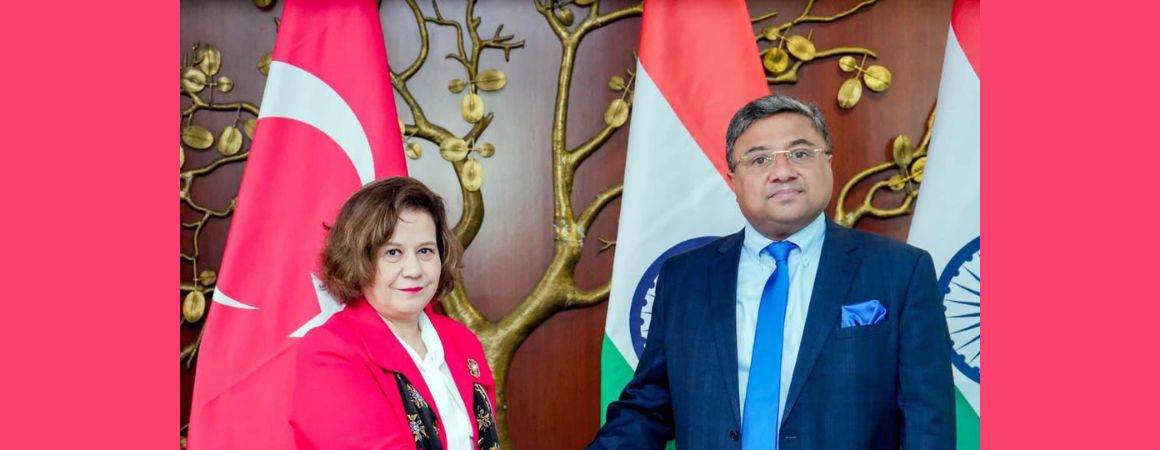
The talks, between delegations led by Turkish Deputy Minister of Foreign Affairs Berris Ekinci and Ministry of External Affairs Secretary (West) Sibi George in Delhi, were held four years after the last round in 2022 in Ankara. Relations have been tense over a number of statements by Turkiye President Recep Erdogan on Kashmir, and spiralled last May over Turkiye’s military support to Pakistan during the Operation Sindoor conflict.
Comprehensive review
“The discussions focused on areas such as trade and investments, tourism, technology and innovation, energy, cooperation in educational and cultural fields, people to people ties, and fight against cross border terrorism,” the Ministry of External affairs said in a statement, referring to the talks as “a comprehensive review of the current state of bilateral relations”.
“The two sides also exchanged views on regional and global issues of mutual interest,” it added. Turkiye was part of the quadrilateral group of Foreign Ministers, along with Egypt, Saudi Arabia, and Pakistan, that met in Islamabad last week to discuss a peace initiative to end the U.S.-Iran conflict. It also played a role in the ceasefire announced on Wednesday (April 8, 2026).
Strained ties
New Delhi and Ankara’s move to revive bilateral talks comes days after Mr. George travelled to Azerbaijan, where ties had also been strained over its government’s support to Pakistan in statements and military assistance, particularly on the supply of drones, and indicates that the Modi government may be revising its position on the issue. In its first briefing on Operation Sindoor to foreign envoys, the MEA had not invited Turkiye, as a mark of protest against its support to Pakistan.
Subsequently, after social media calls for tourism and business links to be snapped, Turkiye saw a 36% drop in tourists from India in June 2025, compared to 2024 figures, although tourist numbers have increased since then. In addition, trade between the two countries dropped an estimated 16% from $10.4 billion in 2025 to $8.71 billion in 2024.
“It is time for Türkiye and India to broaden the scope of economic engagement and breathe new life into their diplomatic relations. In an increasingly fractured world, our cooperation is essential for global stability,” Turkiye Ambassador to India Ali Murat Ersoy told The Hindu.
Pragmatic approach
Former Indian diplomats also said the development reflected a more realistic approach to relations. “In an era of growing global disorder, India-Türkiye talks reflect a pragmatic effort to manage differences and keep lines of communication open,” said Vikas Swarup, who retired as Secretary (West) in the MEA (2019-2021) and had served in the Embassy at Ankara.
After Operation Sindoor, Indian military officials had raised concerns about the supply of equipment and personnel by China, Turkiye and Azerbaijan to Pakistan. Foreign Ministry officials had expressed concerns over the diplomatic support offered by these countries, along with Malaysia, to Islamabad. While Prime Minister Narendra Modi visited China in August that year, resetting ties, and also visited Malaysia in February 2026, he last met President Erdogan in 2023 at the G-20 in Delhi. External Affairs Minister S. Jaishankar last met his Turkish counterpart in February 2024 on the sidelines of an ASEAN summit.
Officials said they hoped the consultations would lead to further talks in other areas, allowing for a resumption of regular dialogue between the two countries.
“Both sides agreed to hold the next round of consultations in Turkiye on mutually convenient dates,” the MEA statement said.
India-Turkiye talks hint at a thaw in bilateral relations
Talks follow consultations with Azerbaijan; indicate shift in New Delhi’s position on ties with countries supporting Pakistan
In the first sign that India and Turkiye could be working to restore bilateral relations ruptured during the India-Pakistan conflict last year, officials from both countries held the 12th round of Foreign Office Consultations (FoC) on Wednesday (April 8, 2026).
The talks, between delegations led by Turkish Deputy Minister of Foreign Affairs Berris Ekinci and Ministry of External Affairs Secretary (West) Sibi George in Delhi, were held four years after the last round in 2022 in Ankara. Relations have been tense over a number of statements by Turkiye President Recep Erdogan on Kashmir, and spiralled last May over Turkiye’s military support to Pakistan during the Operation Sindoor conflict.
Comprehensive review
“The discussions focused on areas such as trade and investments, tourism, technology and innovation, energy, cooperation in educational and cultural fields, people to people ties, and fight against cross border terrorism,” the Ministry of External affairs said in a statement, referring to the talks as “a comprehensive review of the current state of bilateral relations”.
“The two sides also exchanged views on regional and global issues of mutual interest,” it added. Turkiye was part of the quadrilateral group of Foreign Ministers, along with Egypt, Saudi Arabia, and Pakistan, that met in Islamabad last week to discuss a peace initiative to end the U.S.-Iran conflict. It also played a role in the ceasefire announced on Wednesday (April 8, 2026).
Strained ties
New Delhi and Ankara’s move to revive bilateral talks comes days after Mr. George travelled to Azerbaijan, where ties had also been strained over its government’s support to Pakistan in statements and military assistance, particularly on the supply of drones, and indicates that the Modi government may be revising its position on the issue. In its first briefing on Operation Sindoor to foreign envoys, the MEA had not invited Turkiye, as a mark of protest against its support to Pakistan.
Subsequently, after social media calls for tourism and business links to be snapped, Turkiye saw a 36% drop in tourists from India in June 2025, compared to 2024 figures, although tourist numbers have increased since then. In addition, trade between the two countries dropped an estimated 16% from $10.4 billion in 2025 to $8.71 billion in 2024.
“It is time for Türkiye and India to broaden the scope of economic engagement and breathe new life into their diplomatic relations. In an increasingly fractured world, our cooperation is essential for global stability,” Turkiye Ambassador to India Ali Murat Ersoy told The Hindu.
Pragmatic approach
Former Indian diplomats also said the development reflected a more realistic approach to relations. “In an era of growing global disorder, India-Türkiye talks reflect a pragmatic effort to manage differences and keep lines of communication open,” said Vikas Swarup, who retired as Secretary (West) in the MEA (2019-2021) and had served in the Embassy at Ankara.
After Operation Sindoor, Indian military officials had raised concerns about the supply of equipment and personnel by China, Turkiye and Azerbaijan to Pakistan. Foreign Ministry officials had expressed concerns over the diplomatic support offered by these countries, along with Malaysia, to Islamabad. While Prime Minister Narendra Modi visited China in August that year, resetting ties, and also visited Malaysia in February 2026, he last met President Erdogan in 2023 at the G-20 in Delhi. External Affairs Minister S. Jaishankar last met his Turkish counterpart in February 2024 on the sidelines of an ASEAN summit.
Officials said they hoped the consultations would lead to further talks in other areas, allowing for a resumption of regular dialogue between the two countries.
“Both sides agreed to hold the next round of consultations in Turkiye on mutually convenient dates,” the MEA statement said.




NO COMMENT