Mauritius Foreign Minister Dhananjay Ramful praises India for being a ‘first responder’, hopes U.S.-Iran peace talks in Pakistan end in long-term agreement
The torpedoing of an Iranian ship off Sri Lankan waters is a first in the Indian Ocean and must not be allowed to happen again, Mauritius Foreign Minister Dhananjay Ramful said. The impact of the war in West Asia on energy and food security has been at the top of the agenda at the Indian Ocean Conference in Mauritius.
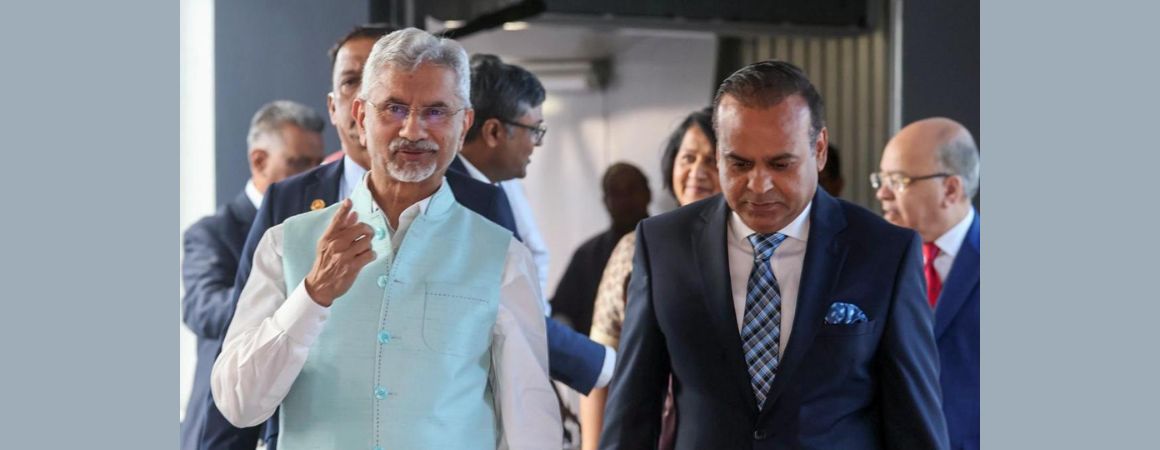
In an interview to The Hindu, Mr. Ramful, who met with External Affairs Minister S. Jaishankar on Friday (April 10, 2026), praised India for support with supplies amidst shortages due to the Hormuz Strait block, and said he hopes U.S.-Iran talks in Pakistan will end with a long-term agreement.
Excerpts:
 What concrete outcomes has the Indian Ocean Conference provided on the way forward for the region after the war in West Asia?
 Definitely, in the speeches of speakers, most of them have been talking about the West Asia crisis, and one thing that is on top of the agenda is about the freedom of navigation. We have the problem with the Strait of Hormuz, and we have to make sure that in this part of the Indian Ocean, the UNCLOS, the international law of the sea, is respected by all coastal states.
In terms of regional security, does the torpedoing of an Iranian ship by the U.S. in the Indian Ocean indicate that IOR (Indian Ocean Region) countries have failed to secure their own region? And do you think India’s role as a net security provider has been challenged by this incident?
Well, I should say that we haven’t had such an incident in the past. This is the first time for many years that we have had such an incident in the Indian Ocean, near Sri Lanka. We have to make sure that this doesn’t happen again in the Indian Ocean. This part of the Indian Ocean so far is pretty safe. I think India has been playing a critical role helping countries and islands in the Indian Ocean to develop their maritime domain awareness, with the India fusion centre in Gurgaon. This is also helping us to upgrade our maritime domain awareness. We have also had the assistance of India whenever there have been any problems, like cyclones, any disasters that have happened. We had an oil spill a few years ago (from a Japanese ship in 2020) and India was the first responder. So I think, having India as our friend in the Indian Ocean helps us a lot.
What are your hopes from the U.S.-Iran talks in Pakistan, and have you been in touch with your Pakistani counterparts?
No, I haven’t spoken to my counterpart, but I think it’s a good sign that we at least have a two-week ceasefire. And we just hope that the parties will give their best endeavour to try to make sure that we have a long-term agreement on this. Because with a war in the Middle East, small island states like Mauritius have been affected in terms of energy security as well as food security. So we just hope this war ends as soon as possible. India has offered its support. We are in the process of signing an MoU (Memorandum of Understanding) on energy supplies — petroleum supplies and fertilizer supplies as well.
Mauritius and Seychelles have agreed on joint sovereignty for one part of the ocean — how does that work?
Well, we share an area on our continental shelf, which is about 365 sq. km. of sea, which we share with Seychelles, and we jointly manage that part of the Indian Ocean when it comes to fishing any resources. We recently signed an MoU on that part of the joint management area with regards to making sure that the marine environment is respected in that area.
Torpedoing of Iranian ship a first for Indian Ocean Region, must not be repeated: Mauritius Foreign Minister
Mauritius Foreign Minister Dhananjay Ramful praises India for being a ‘first responder’, hopes U.S.-Iran peace talks in Pakistan end in long-term agreement
The torpedoing of an Iranian ship off Sri Lankan waters is a first in the Indian Ocean and must not be allowed to happen again, Mauritius Foreign Minister Dhananjay Ramful said. The impact of the war in West Asia on energy and food security has been at the top of the agenda at the Indian Ocean Conference in Mauritius.
In an interview to The Hindu, Mr. Ramful, who met with External Affairs Minister S. Jaishankar on Friday (April 10, 2026), praised India for support with supplies amidst shortages due to the Hormuz Strait block, and said he hopes U.S.-Iran talks in Pakistan will end with a long-term agreement.
Excerpts:
What concrete outcomes has the Indian Ocean Conference provided on the way forward for the region after the war in West Asia?
Definitely, in the speeches of speakers, most of them have been talking about the West Asia crisis, and one thing that is on top of the agenda is about the freedom of navigation. We have the problem with the Strait of Hormuz, and we have to make sure that in this part of the Indian Ocean, the UNCLOS, the international law of the sea, is respected by all coastal states.
In terms of regional security, does the torpedoing of an Iranian ship by the U.S. in the Indian Ocean indicate that IOR (Indian Ocean Region) countries have failed to secure their own region? And do you think India’s role as a net security provider has been challenged by this incident?
Well, I should say that we haven’t had such an incident in the past. This is the first time for many years that we have had such an incident in the Indian Ocean, near Sri Lanka. We have to make sure that this doesn’t happen again in the Indian Ocean. This part of the Indian Ocean so far is pretty safe. I think India has been playing a critical role helping countries and islands in the Indian Ocean to develop their maritime domain awareness, with the India fusion centre in Gurgaon. This is also helping us to upgrade our maritime domain awareness. We have also had the assistance of India whenever there have been any problems, like cyclones, any disasters that have happened. We had an oil spill a few years ago (from a Japanese ship in 2020) and India was the first responder. So I think, having India as our friend in the Indian Ocean helps us a lot.
What are your hopes from the U.S.-Iran talks in Pakistan, and have you been in touch with your Pakistani counterparts?
No, I haven’t spoken to my counterpart, but I think it’s a good sign that we at least have a two-week ceasefire. And we just hope that the parties will give their best endeavour to try to make sure that we have a long-term agreement on this. Because with a war in the Middle East, small island states like Mauritius have been affected in terms of energy security as well as food security. So we just hope this war ends as soon as possible. India has offered its support. We are in the process of signing an MoU (Memorandum of Understanding) on energy supplies — petroleum supplies and fertilizer supplies as well.
Mauritius and Seychelles have agreed on joint sovereignty for one part of the ocean — how does that work?
Well, we share an area on our continental shelf, which is about 365 sq. km. of sea, which we share with Seychelles, and we jointly manage that part of the Indian Ocean when it comes to fishing any resources. We recently signed an MoU on that part of the joint management area with regards to making sure that the marine environment is respected in that area.




NO COMMENT