Shisir Khanal hopes ceasefire holds, says PM Balendra Shah will visit India after bilateral mechanisms meet
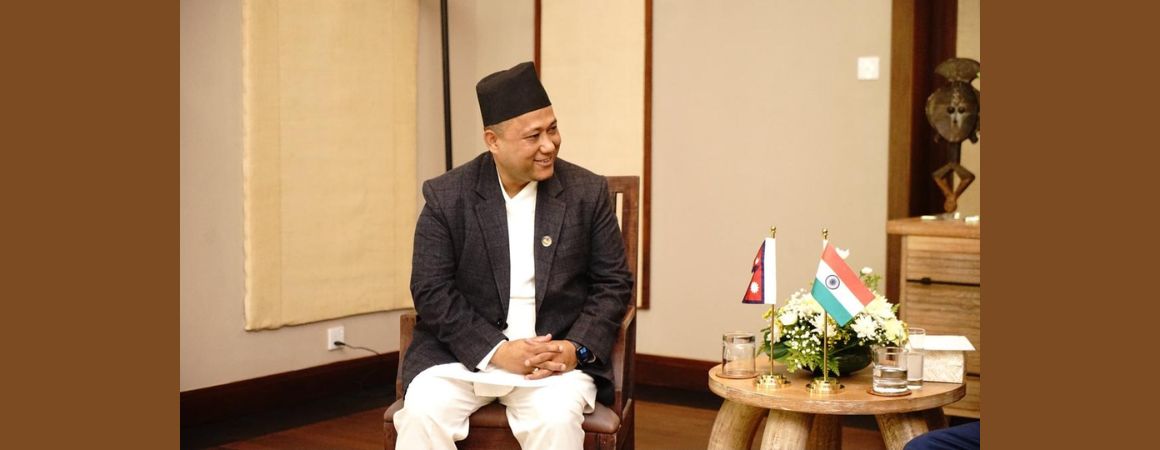
As a landlocked and remittance-dependent country, Nepal has been particularly badly hit by the 39-day war in West Asia, Nepal’s new Foreign Minister Shisir Khanal said. As a South Asian country, Nepal is happy that Pakistan led the effort for talks, which ended inconclusively in Islamabad on Sunday (April 12, 2026), he said, adding that he hopes the ceasefire lasts.
Mr. Khanal, who addressed the Indian Ocean Conference in Mauritius, told The Hindu that he hopes to address ties with India and resolve issues in a structured manner, with bilateral mechanisms meeting before Prime Minister Balendra Shah visits India.
 In your speech at the IOC in Mauritius, you said that landlocked countries have the right to the ocean, and this not a favour that countries do to other countries by giving them access. What did you mean?
 In a modern era, trades and goods move through ocean. That’s the most efficient way goods and people and ideas move along the ocean lines. So international law, even conventions, all allow and require that land locked countries also have access to the oceans. And this would not be a favour, access is not a privilege given by those that [connect them to the ocean].
How badly has Nepal’s economy been affected by the war in West Asia, and what kind of support are you hoping for from India?
Almost two million Nepali work in Gulf region, in Middle East region, and we’ve seen the impact. Even though we’re not party to the conflict, we’ve seen the impact very directly. We’ve lost the life of one Nepali citizen and 27 have been injured. We’re in direct conversation with the governments there to ensure the safety of our citizens. Some of the global effects of the war, like fuel price increases will have a multiplier effect on Nepal’s economy which is very remittance-dependent. We’re also anticipating challenges with fertiliser, especially since the rice planting season is coming up very soon. So the conflict keeps us awake at night. What we had initially feared when the war broke out was the potential exodus of Nepalis returning back home, and fortunately, that hasn’t happened. We hope the [U.S.-Iran] ceasefire will turn into lasting peace.
On the longer term depends how the war goes. For example, many Nepali work in hospitality sector. If the tourism sector gets impacted in the Middle East (West Asia), that means they might lose jobs, they might have to be returned back home. We’ve been in conversation with government of India to ensure that continued supply of fuel and LPG cooking gas, and cooperating immediately on fertiliser supplies.
Are you exploring regional cooperation mechanisms to deal with this problem for the entire region?
Definitely. I mean, there are so many different, multiple mechanisms. South Asian Association for Regional Cooperation, unfortunately, has not been active for the last few years. We would love to see that activated and currently as chair, the burden is on us. At the same time, there’s Bay of Bengal Initiative for Multi-Sectoral Technical and Economic Cooperation and Bangladesh-Bhutan-India-Nepal Initiative that Nepal is engaged on.
U.S.-Iran peace talks were held in South Asia. Have you been in touch with your Pakistani counterpart?
Our biggest hope is to see this truce leading to longer term peace. The war’s impact has not just been on a region, but it has had global impact. So it’s good to see our Pakistani colleagues leading this process and it is good to see South Asia on the map making global efforts. We’ve just taken office, so we’ve not really had an engagement at a deeper level with anyone except, I mean, my first meeting was with India’s Foreign Minister Subrahmanyam Jaishankar and other Foreign Ministers of Bhutan and Bangladesh who were here in Mauritius. Definitely we will continue to have these kind of dialogues on the subject.
Do we expect a visit soon by Prime Minister Shah to Delhi? The tradition used to be that there would be a visit to Delhi before other foreign visits. But that hasn’t been followed in the recent past…
Prime Minister Narendra Modi spoke with our leader even before we took office, and sent a congratulatory note and an invitation. Our Prime Minister has accepted the invitation, but the exact time of the visit will be made through bilateral mechanisms, at the time that’s appropriate for both parties. Most importantly, when I was speaking with Dr. Jaishankar yesterday, what we discussed was that we need to define our priorities as a new government. There are 40 different mechanisms that India and Nepal currently collaborate on. So we want to first make sure that we’re prioritising Nepal’s needs. And after that, some technical visits would happen at MEA level. And following that, I think we expect to see political visits.
What do you see as the foreign policy of the new government, especially when it comes to issues that we have seen have become irritants in the past?
The broad foreign policy in Nepal, I think, will remain consistent in the sense that Nepal Constitution itself has identified territorial integrity, protecting sovereignty, and the UN charter. Nepal has had an independent foreign policy all along and non-alignment guides our foreign policy. So from a broader foreign policy, I do not see any change. Prime Minister Shah, when he was meeting with diplomats in Kathmandu, said new does not necessarily mean discontinuity. With India, there are many different bilateral mechanisms. Our first priority definitely would be to activate these bilateral mechanisms, with both of our neighbours, India and China, and focus on issues of Nepal’s national interest. From our perspective economic growth, fast economic growth is our major priority. So that’s where we want to really work with our neighbours.
How will you manage economic irritants, for example, New Delhi has said that it would not buy power from hydropower plants that have a certain Chinese component, or Nepal’s demand for airspace overflight rights to airports like Gautam Buddha International Airport and Pokhara International Airport?
Some of the hydropower projects are making good progress in the last few years, and also we’ve really made good progress on connectivity transmission lines between the two countries. We’ve become, as a country, an energy exporter to India, and we’ve also signed a tripartite agreement between Bangladesh, India and Nepal to be able to export the electricity from Nepal. We want to build on the progress that we’ve made. Definitely our goal would be to see better connectivity, both in terms of land, train and air, and we will continue to pursue that multimodal connectivity between the two countries. Yesterday, when I was meeting India’s External Affairs Minister, we discussed areas of potential collaboration and on that what we agreed was to start by prioritising Nepal’s own needs at this point as a government, and based on that we will further discuss projects that are either in the pipeline or new ones to be started between the two countries.
Yours is the first Gen-Z government, that have some memories of the 2015 blockade and India-Nepal tensions since then on territorial and economic issues. What do you think needs to be done to put the past decade of troubled ties behind India and Nepal?
If India and Nepal were not neighbours, we would probably not have challenges and conflicts between the two countries. Conflict often happens with people who are closest to you, so I see that as a very natural process. But we have multiple mechanisms to deal with these challenges, and our priority would be to see that we have regular meetings and have conversations. When we meet and discuss, we can solve our differences very easily.
Leaders of past governments in Nepal have always had relations in New Delhi. Given the last few months and the September 2025 violence and protests, will Nepal move towards a political reconciliation process?
As a government, we have very clearly said that we’re not going to take the path of vengeance. Nepal is a democracy and we have established our government through very democratic processes. So we will follow democratic norms, rule of laws, and conduct fair investigations, especially on the issues of corruption and money laundering. We promised this, not just in the last election, but when our party, the Rastriya Swatantra Party, was formed four years ago. There have been many, many corruption scandals, but unfortunately, political leaders and people in power have never been prosecuted for the corruption. So impunity has prevailed in Nepal, and I think that impunity has led to deep seated dissatisfaction and low economic growth, which eventually turned into the September 8 and 9 Gen-Z protests. A strong anti-corruption stand is part of our good governance promise.
West Asia war hit Nepal’s remittance economy, says Foreign Minister Shisir Khanal
Shisir Khanal hopes ceasefire holds, says PM Balendra Shah will visit India after bilateral mechanisms meet
As a landlocked and remittance-dependent country, Nepal has been particularly badly hit by the 39-day war in West Asia, Nepal’s new Foreign Minister Shisir Khanal said. As a South Asian country, Nepal is happy that Pakistan led the effort for talks, which ended inconclusively in Islamabad on Sunday (April 12, 2026), he said, adding that he hopes the ceasefire lasts.
Mr. Khanal, who addressed the Indian Ocean Conference in Mauritius, told The Hindu that he hopes to address ties with India and resolve issues in a structured manner, with bilateral mechanisms meeting before Prime Minister Balendra Shah visits India.
In your speech at the IOC in Mauritius, you said that landlocked countries have the right to the ocean, and this not a favour that countries do to other countries by giving them access. What did you mean?
In a modern era, trades and goods move through ocean. That’s the most efficient way goods and people and ideas move along the ocean lines. So international law, even conventions, all allow and require that land locked countries also have access to the oceans. And this would not be a favour, access is not a privilege given by those that [connect them to the ocean].
How badly has Nepal’s economy been affected by the war in West Asia, and what kind of support are you hoping for from India?
Almost two million Nepali work in Gulf region, in Middle East region, and we’ve seen the impact. Even though we’re not party to the conflict, we’ve seen the impact very directly. We’ve lost the life of one Nepali citizen and 27 have been injured. We’re in direct conversation with the governments there to ensure the safety of our citizens. Some of the global effects of the war, like fuel price increases will have a multiplier effect on Nepal’s economy which is very remittance-dependent. We’re also anticipating challenges with fertiliser, especially since the rice planting season is coming up very soon. So the conflict keeps us awake at night. What we had initially feared when the war broke out was the potential exodus of Nepalis returning back home, and fortunately, that hasn’t happened. We hope the [U.S.-Iran] ceasefire will turn into lasting peace.
On the longer term depends how the war goes. For example, many Nepali work in hospitality sector. If the tourism sector gets impacted in the Middle East (West Asia), that means they might lose jobs, they might have to be returned back home. We’ve been in conversation with government of India to ensure that continued supply of fuel and LPG cooking gas, and cooperating immediately on fertiliser supplies.
Are you exploring regional cooperation mechanisms to deal with this problem for the entire region?
Definitely. I mean, there are so many different, multiple mechanisms. South Asian Association for Regional Cooperation, unfortunately, has not been active for the last few years. We would love to see that activated and currently as chair, the burden is on us. At the same time, there’s Bay of Bengal Initiative for Multi-Sectoral Technical and Economic Cooperation and Bangladesh-Bhutan-India-Nepal Initiative that Nepal is engaged on.
U.S.-Iran peace talks were held in South Asia. Have you been in touch with your Pakistani counterpart?
Our biggest hope is to see this truce leading to longer term peace. The war’s impact has not just been on a region, but it has had global impact. So it’s good to see our Pakistani colleagues leading this process and it is good to see South Asia on the map making global efforts. We’ve just taken office, so we’ve not really had an engagement at a deeper level with anyone except, I mean, my first meeting was with India’s Foreign Minister Subrahmanyam Jaishankar and other Foreign Ministers of Bhutan and Bangladesh who were here in Mauritius. Definitely we will continue to have these kind of dialogues on the subject.
Do we expect a visit soon by Prime Minister Shah to Delhi? The tradition used to be that there would be a visit to Delhi before other foreign visits. But that hasn’t been followed in the recent past…
Prime Minister Narendra Modi spoke with our leader even before we took office, and sent a congratulatory note and an invitation. Our Prime Minister has accepted the invitation, but the exact time of the visit will be made through bilateral mechanisms, at the time that’s appropriate for both parties. Most importantly, when I was speaking with Dr. Jaishankar yesterday, what we discussed was that we need to define our priorities as a new government. There are 40 different mechanisms that India and Nepal currently collaborate on. So we want to first make sure that we’re prioritising Nepal’s needs. And after that, some technical visits would happen at MEA level. And following that, I think we expect to see political visits.
What do you see as the foreign policy of the new government, especially when it comes to issues that we have seen have become irritants in the past?
The broad foreign policy in Nepal, I think, will remain consistent in the sense that Nepal Constitution itself has identified territorial integrity, protecting sovereignty, and the UN charter. Nepal has had an independent foreign policy all along and non-alignment guides our foreign policy. So from a broader foreign policy, I do not see any change. Prime Minister Shah, when he was meeting with diplomats in Kathmandu, said new does not necessarily mean discontinuity. With India, there are many different bilateral mechanisms. Our first priority definitely would be to activate these bilateral mechanisms, with both of our neighbours, India and China, and focus on issues of Nepal’s national interest. From our perspective economic growth, fast economic growth is our major priority. So that’s where we want to really work with our neighbours.
How will you manage economic irritants, for example, New Delhi has said that it would not buy power from hydropower plants that have a certain Chinese component, or Nepal’s demand for airspace overflight rights to airports like Gautam Buddha International Airport and Pokhara International Airport?
Some of the hydropower projects are making good progress in the last few years, and also we’ve really made good progress on connectivity transmission lines between the two countries. We’ve become, as a country, an energy exporter to India, and we’ve also signed a tripartite agreement between Bangladesh, India and Nepal to be able to export the electricity from Nepal. We want to build on the progress that we’ve made. Definitely our goal would be to see better connectivity, both in terms of land, train and air, and we will continue to pursue that multimodal connectivity between the two countries. Yesterday, when I was meeting India’s External Affairs Minister, we discussed areas of potential collaboration and on that what we agreed was to start by prioritising Nepal’s own needs at this point as a government, and based on that we will further discuss projects that are either in the pipeline or new ones to be started between the two countries.
Yours is the first Gen-Z government, that have some memories of the 2015 blockade and India-Nepal tensions since then on territorial and economic issues. What do you think needs to be done to put the past decade of troubled ties behind India and Nepal?
If India and Nepal were not neighbours, we would probably not have challenges and conflicts between the two countries. Conflict often happens with people who are closest to you, so I see that as a very natural process. But we have multiple mechanisms to deal with these challenges, and our priority would be to see that we have regular meetings and have conversations. When we meet and discuss, we can solve our differences very easily.
Leaders of past governments in Nepal have always had relations in New Delhi. Given the last few months and the September 2025 violence and protests, will Nepal move towards a political reconciliation process?
As a government, we have very clearly said that we’re not going to take the path of vengeance. Nepal is a democracy and we have established our government through very democratic processes. So we will follow democratic norms, rule of laws, and conduct fair investigations, especially on the issues of corruption and money laundering. We promised this, not just in the last election, but when our party, the Rastriya Swatantra Party, was formed four years ago. There have been many, many corruption scandals, but unfortunately, political leaders and people in power have never been prosecuted for the corruption. So impunity has prevailed in Nepal, and I think that impunity has led to deep seated dissatisfaction and low economic growth, which eventually turned into the September 8 and 9 Gen-Z protests. A strong anti-corruption stand is part of our good governance promise.




NO COMMENT